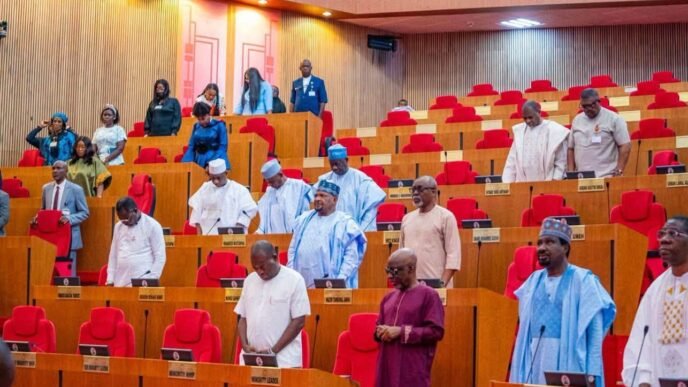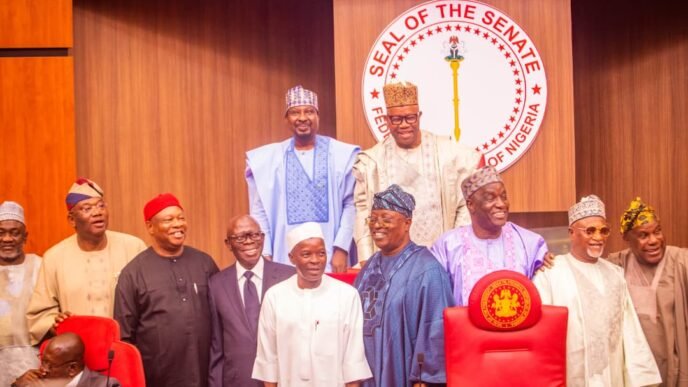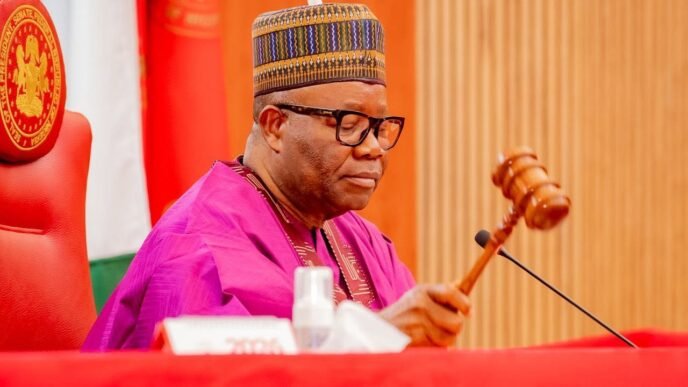

The Nigerian Senate has formally rejected the creation of a standalone regulatory body for the financial technology (Fintech) sector, opting instead to consolidate all supervisory powers within the Central Bank of Nigeria (CBN).
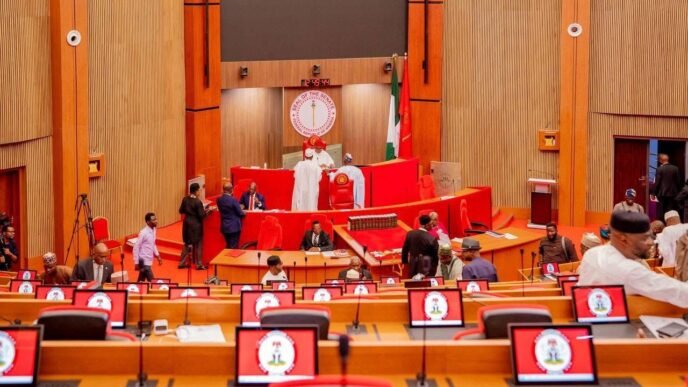
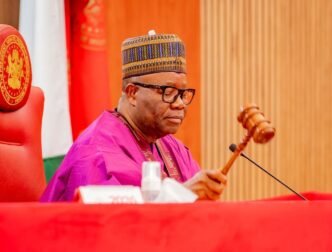
The decision was announced on Wednesday by Senator Mukhail Adetokunbo Abiru, Chairman of the Senate Committee on Banking, Insurance, and Other Financial Institutions, during a high-stakes public hearing at the National Assembly. The session addressed the Banks and Other Financial Institutions Act (Amendment) Bill, 2025 (SB. 959) and an investigative probe into the devastating rise of Ponzi schemes, specifically the recent Crypto Bullion Exchange (CBEX) incident.
The proposed amendment to BOFIA 2020 seeks to modernize Nigeria’s financial laws to match the rapid evolution of digital platforms. Senator Abiru noted that while fintechs have revolutionized financial inclusion, the current regulatory framework has lagged behind their systemic importance.
Key highlights of the amendment include:
Systemically Important Institutions: Empowering the CBN to officially designate and supervise large-scale fintechs that handle massive transaction volumes and sensitive data.
National Registry: Establishing a transparent registry for beneficial ownership disclosure.
Data Sovereignty: Enhancing digital security and ensuring financial data remains within national jurisdiction.
Addressing calls for a new “Fintech Commission,” Senator Abiru argued that such a move would be counterproductive.
“Establishing an entirely new agency would duplicate functions, create bureaucratic overlap, and increase administrative costs,” Abiru stated. “Fintech regulation is inseparable from monetary policy and AML enforcement functions that already reside within the CBN.”
The Senate maintains that it is more efficient to strengthen the CBN’s existing powers while mandating strict coordination with agencies like the SEC, NCC, EFCC, and the Office of the National Security Adviser.
The Senate also intensified its crackdown on fraudulent investment platforms, describing them as a “serious threat” to national financial stability. Citing the CBEX scandal, which stripped retirees, students, and small business owners of their savings, the Committee warned that these schemes damage Nigeria’s international reputation and facilitate illicit financial flows.
The joint committee comprising Banking, ICT, Capital Markets, and Anti-Corruption units is currently reviewing submissions from the NDIC, EFCC, and the Chartered Institute of Bankers of Nigeria (CIBN) to finalize stricter penalties for fraudulent operators.