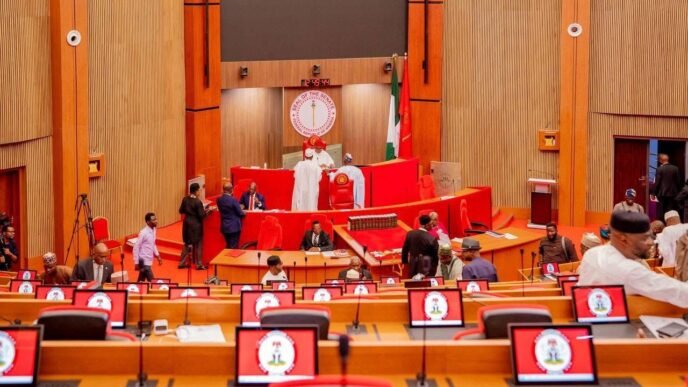
February 10, 2026 — The Nigerian Senate has signaled a zero-tolerance approach to fiscal indiscipline, vowing “meticulous scrutiny” and “strict oversight” as the N58.47 trillion 2026 Appropriation Bill moves toward final passage.
The upper chamber, led by the Senate Committee on Appropriations, has set March 17, 2026, as the target date to pass the record-breaking budget, christened the “Budget of Consolidation, Renewed Resilience, and Shared Prosperity.”
Following the bill’s successful second reading, Senate leaders emphasized that the era of “experimental” budgeting is over. Speaking on the floor, Senate Leader Opeyemi Bamidele underscored that the 2026 framework is a legal instrument designed to translate President Bola Tinubu’s policy directions into “enforceable public expenditure.”
“The true test of a budget is not in its presentation, but in its delivery,” Bamidele stated, urging lawmakers to ensure every naira delivers “value for money.”
Key senators, including Ali Ndume and Ahmad Lawan, echoed these sentiments, demanding “implementation to the letter” and warning against waste in the procurement processes—particularly within the massive N5.41 trillion defense allocation.
The Fiscal Breakdown
The 2026 budget marks a significant shift in Nigeria’s spending strategy, with capital expenditure (N23.21 trillion) notably outpacing recurrent non-debt spending.
Category, Allocation (Naira)
Total Expenditure, 58.47 Trillion
Capital Expenditure, 23.21 Trillion
Debt Servicing, 15.91 Trillion
Recurrent (Non-Debt), 15.25 Trillion
Statutory Transfers, 4.09 Trillion
Projected Revenue, N34.33 Trillion
Budget Deficit, N23.85 Trillion (approx. 4.28% of GDP)
The budget is built on a crude oil benchmark of $64.85 per barrel and a production target of 1.84 million barrels per day. Sectoral focus remains heavily weighted toward:
Security & Defence: N5.41 Trillion
Infrastructure: N3.56 TrillionEducation: N3.54 Trillion
Health: N2.48 Trillion
The Senate has outlined an aggressive timeline to meet its March deadline:
Feb 2 – Feb 13: MDAs (Ministries, Departments, and Agencies) to defend their estimates before standing committees.
Feb 16 – Feb 23: Submission of reports by subcommittee chairmen.
March 5: Interactive session with economic managers, including Finance Minister Wale Edun.
March 17: Expected final passage of the bill.
The Senate Committee on Finance has also warned that it will work to end the “overlapping budget” syndrome by ensuring the 2026 cycle aligns strictly with the January–December calendar.