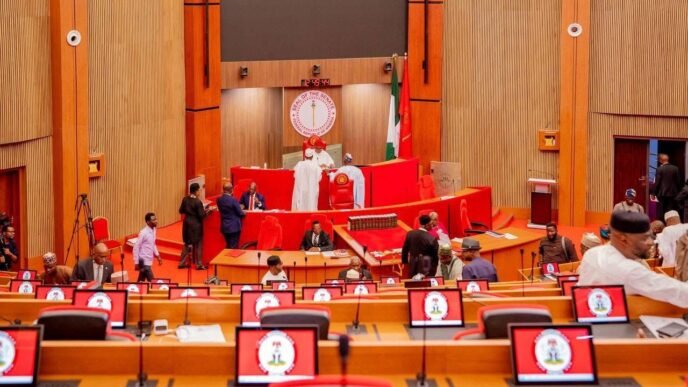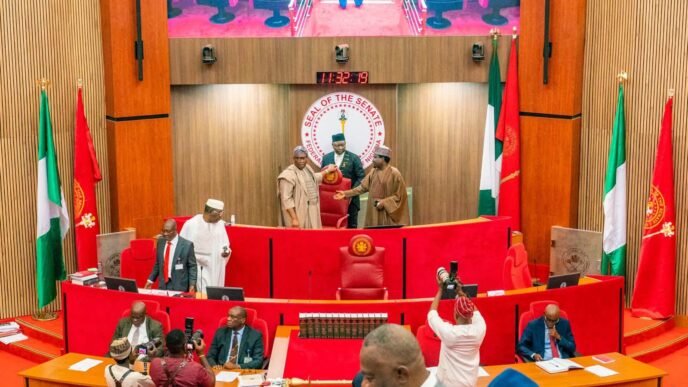
The Senate Committee on Defence has issued a stern directive regarding the timely release and utilization of military funding, warning that administrative delays in budget implementation directly compromise the nation’s safety.
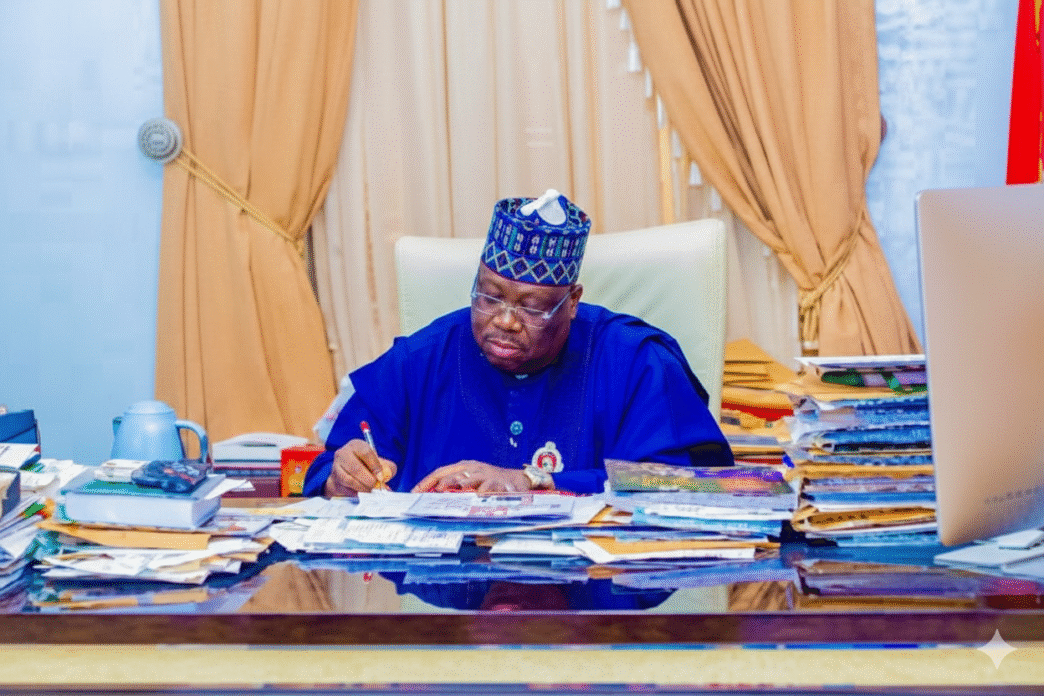
During a budget defense session held on Wednesday, Committee Chairman Senator Ahmed Lawan scrutinized the Ministry of Defence’s 2025 performance and its 2026 proposal. While reaffirming the Senate’s unwavering support for the Armed Forces, Lawan expressed deep concern over the sluggish pace of 2025 budget execution, noting that several critical projects had been rolled over into the new fiscal year.
Senator Lawan emphasized that unlike other sectors, defence spending is time-sensitive and critical to maintaining a strategic advantage over insurgent groups.
“You cannot postpone the implementation of the defence budget because that gives an edge to the enemy,” Senator Lawan stated. “We must insist that our security agencies have their budgets fully implemented to secure Nigerian lives. They need the tools and weapons to fight; if we provide those, they can effectively combat insecurity.”
The Chairman characterized the session as a vital exercise in transparency. He questioned how the ministry could effectively transition into 2026 if the previous year’s resources remained underutilized. The committee pledged to maintain rigorous oversight to ensure that every naira appropriated translates into tangible security improvements on the ground.
In his first budget defense session, the Minister of Defence, General Christopher Musa, acknowledged the ongoing security hurdles facing the country. While presenting the 2026 proposal, the Minister expressed optimism for the future.
“Challenges are still there, but we are hoping to do better,” General Musa remarked. He attributed the ministry’s current progress to the sustained cooperation and legislative backing of the National Assembly.
The Senate Committee concluded the session by reiterating that the full implementation of the defence budget is not merely a fiscal requirement, but a national security priority that cannot be compromised.