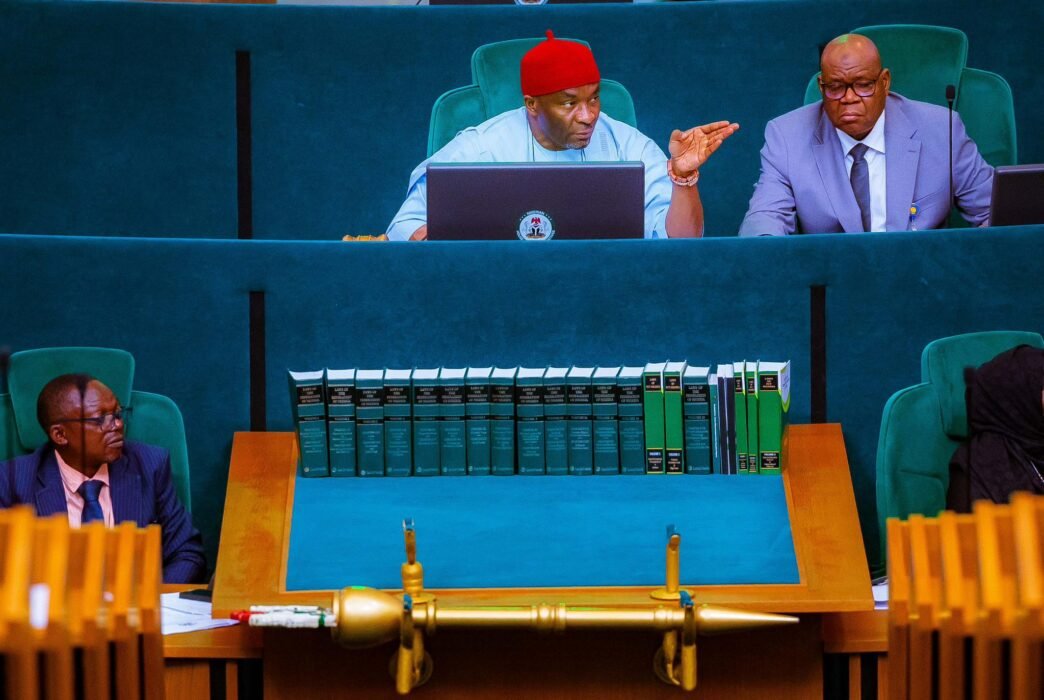
The House of Representatives, on Wednesday, passed two critical amendments to the Electoral Act 2026. Sponsored by Deputy Speaker Benjamin Kalu, the new provisions specifically target the jurisdiction of pre-election matters and introduce technology-driven methods for the service of legal processes in election petitions.
The first amendment clarifies the jurisdiction of pre-election matters, a frequent flashpoint for conflicting court orders in previous election cycles. By refining these boundaries, the House aims to “address interpretative ambiguities exposed by recent electoral litigation,” ensuring that disputes regarding candidate nominations and party primaries are handled by specific courts with clear mandates.
Lawmakers noted that the amendment compresses the timeline for intra-party disputes by shortening the deadline for submitting candidate lists from 180 days to 120 days before election day. This change is designed to ensure that pre-election litigation is resolved well before the general polls, preventing the “prolonged pre-election tensions” that have historically clouded the start of voting.
In a significant departure from traditional manual service, the second amendment provides for “flexible, reliable and technology-driven modes” for the service of election petition processes.
Historically, petitioners often faced delays or deliberate evasion of service by respondents, leading to the expiration of the strict constitutional timelines for hearing cases. The new legal framework now permits:
- The use of email and other digital platforms to serve court documents.
- Political parties are now mandated to maintain digital membership registers, which will facilitate the identification and electronic notification of relevant parties in a dispute.
These amendments are part of a wider legislative overhaul that includes the statutory codification of the Bimodal Voter Accreditation System (BVAS) and the Election Results Viewing Portal (IReV). President Bola Tinubu signed the harmonized version of the bill into law in February 2026, emphasizing that while manual elements remain for the safety of the physical vote, the transmission and judicial oversight of those votes must embrace the digital age to ensure “arithmetic accuracy” and transparency.
The House emphasized that these reforms are intended to provide the Independent National Electoral Commission (INEC) and the judiciary with a “coherent, predictable, and legally certain” framework ahead of the 2027 general elections.