
January 2, 2026-The Federal Government of Nigeria has officially declared an end to the “multiple budget” era, a systemic dysfunction that has plagued the country’s fiscal planning for decades. For years, Nigeria struggled with the phenomenon of “overlapping cycles,” where the capital component of one year’s budget would still be running months after the next year’s budget had commenced. This practice often resulted in three concurrent budgets (a main budget, a supplementary budget, and a previous year’s extension) competing for the same limited resources.
To address this, the re-enacted 2025 Appropriation Act includes a definitive “sunset clause,” extending the implementation window for capital projects to March 31, 2026. This extension is not an invitation for delay but a strategic alignment designed to ensure that all capital components of the 2024 and 2025 fiscal years are fully concluded before the 2026 budget cycle begins in earnest.
Restoring the January-December Cycle
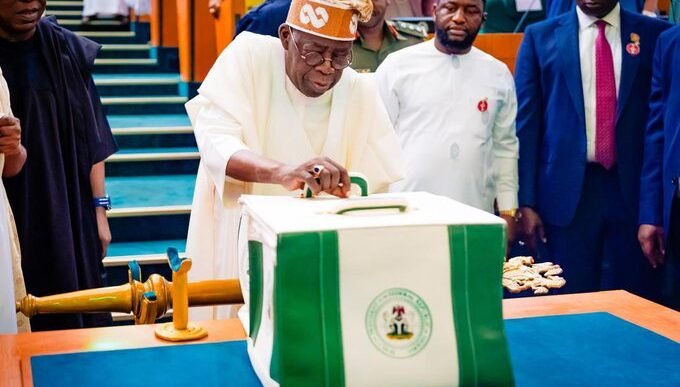
One of the primary goals of the Tinubu administration has been the restoration of the January-to-December fiscal calendar. However, the economic shocks of 2024—including the removal of the fuel subsidy and the unification of the exchange rate—disrupted the initial timelines. The repeal and re-enactment process serves as a “reset button.” By extending the 2025 implementation to March 2026, the government aims to complete at least 30% of its capital targets, which had previously been stalled due to funding gaps and administrative hurdles.
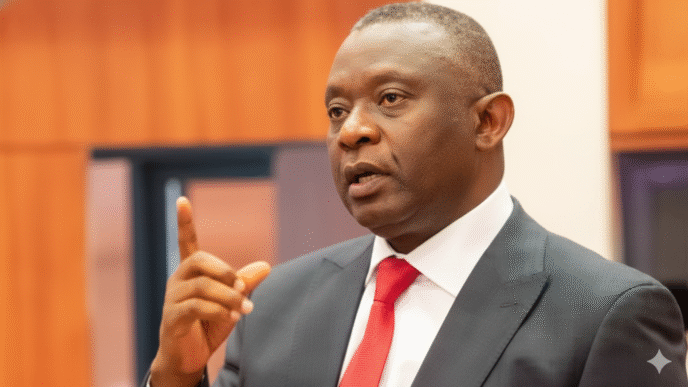
“Running concurrent budgets is a recipe for abandoned projects and fiscal indiscipline,” stated Tanimu Yakubu, Director-General of the Budget Office. “When we have different budgets running at the same time, it becomes nearly impossible to track which funds are being used for which projects. The re-enactment clarifies that for the 2025 fiscal year, we are focusing on a ₦16.76 trillion capital expenditure plan that must be wrapped up by March.”
Implications for MDAs
Ministries, Departments, and Agencies (MDAs) have been issued strict directives to prioritize the completion of ongoing projects. The 2026 Abridged Budget Call Circular already indicates that 70% of the 2025 capital budget will be rolled over into the 2026 plan if they are not concluded by the March deadline. This rollover mechanism, formalized through the re-enactment, ensures that contractors are not left in limbo and that projects are not abandoned simply because a calendar year has ended.
The National Library of Nigeria notes that this shift marks a significant evolution in Nigeria’s administrative history. For the first time, there is a clear legislative path to resolving the “budget rollover” crisis that has historically led to a backlog of over 10,000 abandoned projects across the federation. This reform is expected to improve the “value for money” ratio in public spending and ensure that the 2026 budget can start on a clean, unified footing on April 1, 2026.