The National Assembly has formally approved President Bola Ahmed Tinubu’s request for a $6.9 billion foreign loan facility, marking a significant step in the administration’s drive to bridge Nigeria’s infrastructure gap and stabilize the national economy.
A standout provision of the approval, following the recommendation of the Senate Committee on Local and Foreign Debt, mandates that 40% of the loan be dedicated exclusively to capital projects within the 2025 and 2026 fiscal cycles. This ensures that the borrowing translates directly into tangible development and long-term national assets.
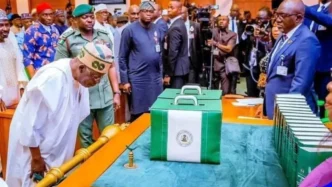
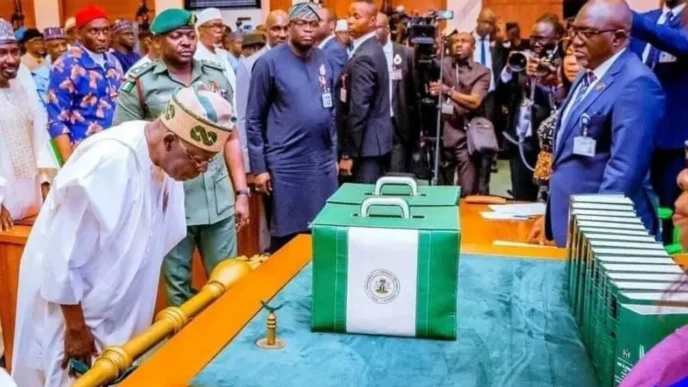
In a concurrent move to strengthen fiscal transparency, President Tinubu requested an upward adjustment of the 2026 Appropriation Bill. The proposal seeks to increase the total budget from ₦58.4 trillion to ₦67.4 trillion—a ₦9 trillion augmentation designed to:
Resolve Outstanding Commitments: Regularize legal obligations carried over from previous cycles to prevent them from hindering new budget execution.
Consolidate Debt: Properly capture existing government indebtedness within a transparent fiscal framework.
Fund Strategic Priorities: Provide dedicated resources for a select number of high-impact national projects.
Promote Stability: Align financing strategies with macro-fiscal stability targets while reducing borrowing pressure on the domestic financial market.
The 2026 budget themed “Budget of Consolidation, Renewed Resilience, and Shared Prosperity” is anchored on principles of realism and prudence.
“These numbers are not just accounting lines. They are a statement of national priorities,” President Tinubu remarked. “We remain firmly committed to fiscal sustainability, debt transparency, and value for money spending.”
Key Economic Benchmarks:
| Metric | Projection |
|---|---|
| Total Expenditure | ₦67.4 Trillion |
| Total Revenue | ₦34.33 Trillion |
| Fiscal Deficit | ₦23.85 Trillion (4.28% of GDP) |
| Crude Oil Benchmark | $64.85 per barrel |
| Oil Production | 1.84 million barrels per day |
| Exchange Rate | ₦1,400 to $1 USD |
Reflecting the administration’s commitment to national stability, ₦5.41 trillion has been earmarked for defense and security, representing roughly 9.3% of the total projected expenditure.
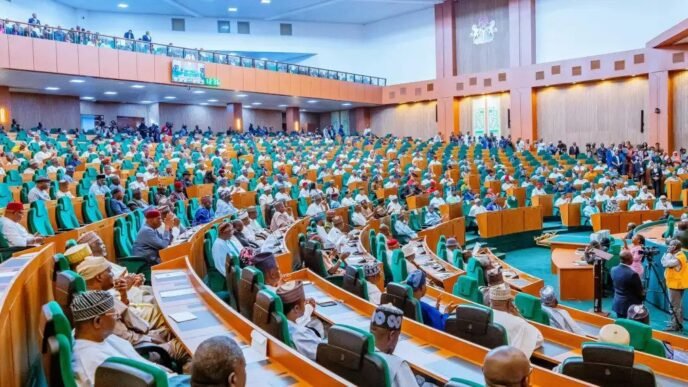
The Senate’s swift review and passage of these requests signal a unified legislative and executive front aimed at fostering economic growth and ensuring that the 2026-2028 Medium Term Expenditure Framework (MTEF) delivers sustainable prosperity for all Nigerians.