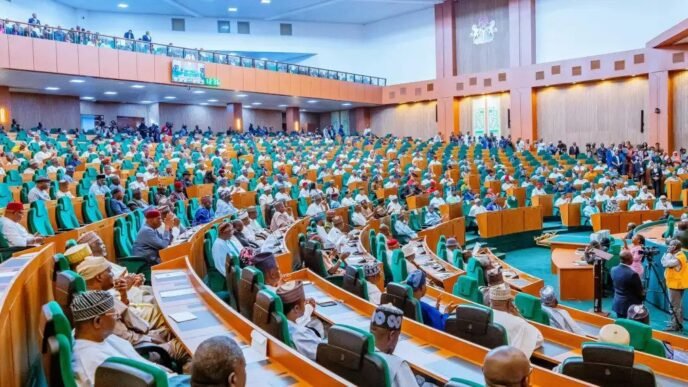

The National Assembly has officially passed the 2026 Appropriation Bill, approving a total expenditure of ₦68.323 trillion. This represents a strategic upward revision of over ₦9.09 trillion from the initial ₦58.47 trillion proposal submitted by President Bola Ahmed Tinubu.
The revised fiscal framework follows a formal request from the President to accommodate critical legacy commitments. These funds are specifically earmarked to accelerate development in the transportation and health sectors, while providing essential financial boosts to the judiciary and addressing outstanding national obligations.
In a landmark move for development, the budget allocates a staggering ₦32.287 trillion to Capital Projects, representing nearly half of the total expenditure. This reinforces the administration’s focus on long term economic stimulation over consumption.
The approved 2026 fiscal plan is categorized as follows:
Healthcare & Finance: The health sector is set to receive ₦482.758 billion, while the Ministry of Finance Incorporated (MoFI) has been allocated ₦478.600 billion.
Judicial Independence: Total judicial funding stands at ₦268 billion, with specific provisions of ₦36 billion for the Supreme Court to enhance the administration of justice.
National Connectivity: In a bid to revolutionize inland logistics, ₦8.960 billion was approved for feasibility studies on the Calabar Maiduguri and Maiduguri–Sokoto road corridors.
Legacy Debt Resolution: ₦5.71 trillion is dedicated to regularizing capital obligations carried over from 2025, ensuring contractors and developers are paid for completed works.
To ensure value for money and the successful delivery of existing infrastructure, the National Assembly has approved an extension for the capital component of the 2025 Budget. The implementation deadline has been shifted from March 31 to June 30, 2026, allowing MDAs (Ministries, Departments, and Agencies) to complete ongoing projects without fiscal interruption.
This Legacy Budget signals a robust effort by the Federal Government to close the infrastructure gap while maintaining fiscal responsibility and institutional support.