January 1, 2026-In a landmark plenary session that underscores the evolving nature of Nigeria’s public finance management, the National Assembly has successfully concluded the repeal and re-enactment of the 2024 and 2025 Appropriation Acts. This legislative maneuver, while rare in the history of Nigeria’s Fourth Republic, was necessitated by a fundamental shift in the nation’s macroeconomic landscape and the urgent need to regularize expenditures that had exceeded original projections due to inflationary pressures and currency adjustments.
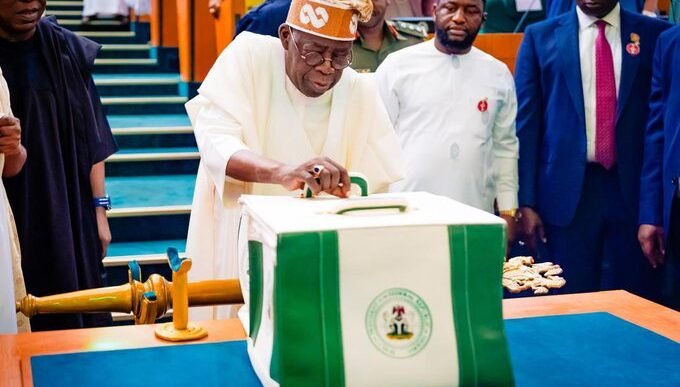
The process began in late 2025 when President Bola Ahmed Tinubu transmitted the Appropriation (Repeal and Re-enactment) Bills to both chambers. The primary objective was to replace the existing, fragmented budget frameworks with consolidated laws that reflect the current implementation capacity of the government. Under the new acts, the 2024 budget has been formally re-enacted at ₦43.56 trillion—a significant increase from the initial ₦35.05 trillion—while the 2025 budget has been adjusted to ₦48.31 trillion.
A “Clean Slate” Approach
The decision to “repeal and re-enact” rather than merely “amend” represents a strategic choice by the 10th National Assembly to ensure legal clarity. By repealing the previous acts, the legislature has effectively wiped the slate clean, preventing the confusion that often arises when multiple supplementary appropriation acts are layered on top of a principal law. This “all-in-one” legislative instrument provides a single, authoritative reference point for the Accountant General of the Federation and the Budget Office.
Senate President Godswill Akpabio, during the final reading, emphasized that the move was about “restoring sanity to the budget process.” He noted that the previous system of overlapping supplementary budgets had made it difficult for the legislature to perform its oversight functions effectively. The new re-enacted laws consolidate all prior supplementary requests, including the ₦6.2 trillion addition from mid-2024, into a cohesive fiscal plan.
The Power of the Purse
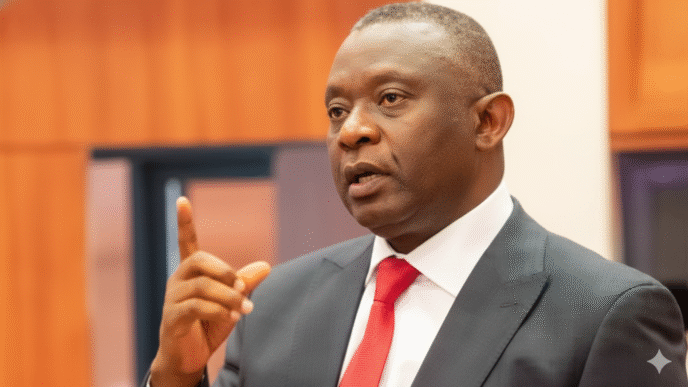
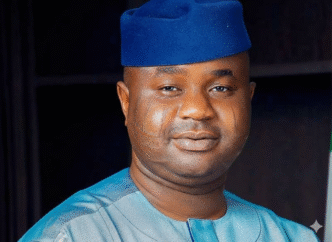
The re-enactment process also reasserts the “power of the purse” held by the National Assembly. Legislators spent weeks in committee sessions, led by the Joint Committee on Appropriations, to scrutinize the revised figures. The committee, chaired by , engaged with the Minister of Finance and Coordinating Minister of the Economy, Wale Edun, and the Director-General of the Budget Office, Tanimu Yakubu, to ensure that the increased expenditure was matched by realistic revenue projections.
This milestone is particularly significant for the National Library of Nigeria, as the enrolled versions of these Acts will become the definitive legal documents for researchers and policy analysts studying the “Renewed Hope” era of fiscal policy. The re-enacted acts include detailed schedules for debt servicing, which is projected at ₦8.27 trillion for 2024 and ₦14.31 trillion for 2025, reflecting the high cost of borrowing and the impact of interest rates on the national treasury.
As the nation moves into 2026, this legislative milestone serves as a foundation for a more predictable fiscal environment, aimed at fostering investor confidence and ensuring that the government’s spending remains within the bounds of law and transparency.