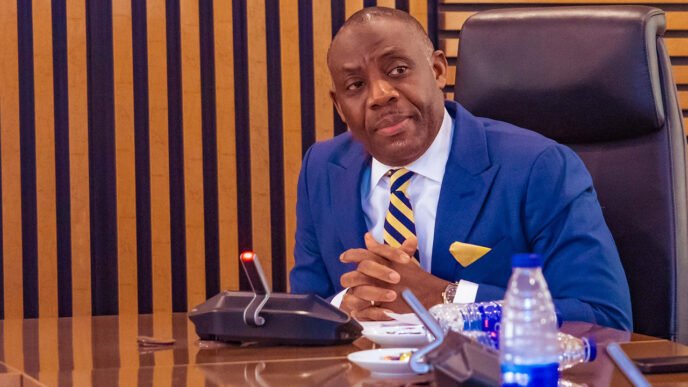
February 11, 2026 — The Minister of Marine and Blue Economy, Adegboyega Oyetola, has cautioned that the ambitious reforms aimed at repositioning Nigeria’s maritime sector are at risk due to significant funding gaps.
Appearing before the National Assembly on Wednesday to defend his ministry’s N10.5 billion budget proposal for 2026, Oyetola argued that the current allocation is insufficient to meet the sector’s vast infrastructure and security needs.
Key Takeaways from the Budget Defense
Financial Constraints: The Minister characterized the proposed budget as “inadequate” relative to the ministry’s mandate to drive economic diversification through the “Blue Economy.”
Reform at Risk: Critical projects—including port modernization, dredging, and enhanced maritime security—could face delays if additional funding is not secured.
Economic Impact: Oyetola emphasized that the maritime sector remains a cornerstone for revenue generation, but its potential is being stifled by aging infrastructure.
Members of the joint committee acknowledged the strategic importance of the ministry, which was created to tap into the multi-trillion naira potential of Nigeria’s oceans and inland waterways. However, lawmakers also questioned how the ministry intends to prioritize its existing resources amidst the country’s broader fiscal challenges.
“We cannot achieve a world-class maritime hub on a shoestring budget,” Oyetola told the committee, noting that the sector requires aggressive investment to compete with neighboring West African ports.
The Ministry of Marine and Blue Economy is central to the federal government’s plan to move the Nigerian economy away from its heavy reliance on oil. Success in this sector would mean more jobs, lower shipping costs, and a massive boost in non-oil exports.