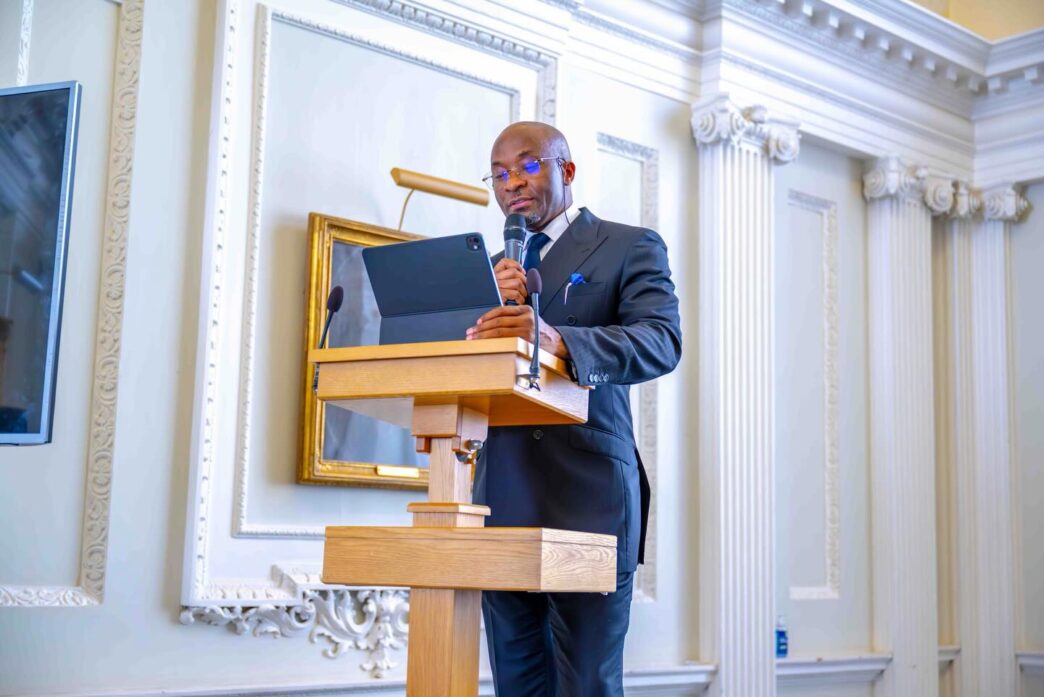
Deputy Speaker of the House of Representatives, Rt. Hon. Benjamin Okezie Kalu, has urged the World Trade Organization (WTO) to deliver concrete outcomes on food security and trade reforms, warning that prolonged delays on key issues are eroding confidence in the multilateral trading system.
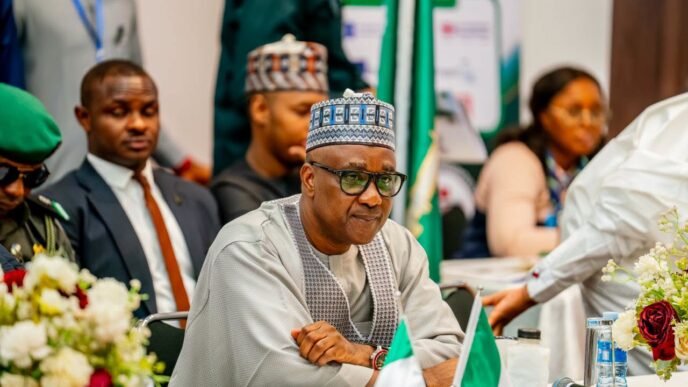
Kalu made the call on Friday in Geneva, Switzerland, during the 57th Session of the Steering Committee of the Parliamentary Conference on the World Trade Organization (PCWTO), which had WTO Director-General, Dr. Ngozi Okonjo-Iweala, as a special guest.
The session, jointly organised by the Inter-Parliamentary Union (IPU) and the European Parliament, brought together parliamentarians from national and regional legislatures, the European Parliament, IPU officials and trade policy experts.
The committee reviewed developments in multilateral trade negotiations, follow-up actions from the 14th WTO Ministerial Conference and the outcomes of the PCWTO session held in Yaoundé, Cameroon.
It also considered the implementation of the Yaoundé recommendations, stronger engagement with parliamentary trade committees, increased participation in PCWTO activities, cooperation with businesses and civil society, and preparations for the 2026-2027 programme, including parliamentary input to the WTO Public Forum.
While acknowledging progress on fisheries subsidies and development-related issues, Kalu said the credibility of the WTO would ultimately be judged by its ability to deliver meaningful outcomes, particularly for developing countries.
He expressed concern over the failure to reach a permanent solution on public stockholding for food security, 13 years after members committed to addressing the issue at the 2013 Bali Ministerial Conference.
Nigeria, he noted, has co-sponsored the demand by the African Group, the African, Caribbean and Pacific Group and the G33 for a permanent solution.
“Thirteen years cannot be explained as an ordinary negotiating delay. Behind every delayed outcome are farmers, workers and families living with the consequences of decisions we defer,” Kalu said.
As an interim measure, the Deputy Speaker proposed that WTO members consider a waiver under Article IX:3 of the Marrakesh Agreement to cover qualifying public stockholding programmes.
He argued that the requirement for consensus should not render an explicit treaty mechanism permanently unusable in the face of pressing food security needs.
Kalu also raised concerns over the Investment Facilitation for Development Agreement, saying broad support for the agreement has remained stalled because of a single formal objection.
He called for greater accountability from national parliaments, proposing that participating legislatures should submit reports on concrete steps taken to advance PCWTO and WTO outcomes before each Steering Committee meeting.
“Yaoundé revealed problems that are already well understood. The challenge now is to create political accountability for governments to explain what they are actually doing about them. If credibility is the issue, accountability must be the response,” he said.
Kalu proposed that participating parliaments should, ahead of each Steering Committee meeting, report on actions taken within their jurisdictions to advance the outcomes of Yaoundé and the 14th Ministerial Conference.
“I propose that before each Steering Committee meeting, participating parliaments should report on concrete steps taken within their own jurisdictions to advance the outcomes of Yaoundé and MC14, identifying the responsible authority, the action taken, the government’s stated position and the current status,” he said.
“Too often, our discussions focus on what Geneva has or has not done. We should devote equal attention to what our own governments and legislatures have done since the last meeting. Accountability must run in both directions.”
The Deputy Speaker further cautioned that improving attendance at WTO-related meetings alone would not resolve the challenge of parliamentary relevance in trade governance.
He noted that in many jurisdictions, legislatures are briefed only after negotiating positions have already been finalised.
To address the gap, Kalu proposed that future PCWTO sessions should be anchored on a focused economic agenda covering contested issues such as public stockholding, investment facilitation, the e-commerce moratorium and digital trade rules.
Such an approach, he said, would enable parliamentarians to transmit clear conclusions and areas of divergence to trade ministers ahead of negotiations.
Kalu, who joined the PCWTO Steering Committee in February 2025, also secured a reaffirmation from the IPU Secretary-General of the Union’s commitment to work with him towards the successful hosting of the PCWTO event scheduled for Abuja in 2027.
He reaffirmed Nigeria’s commitment to a fair, credible and development-oriented trading system.
“Distinguished colleagues, behind every delayed outcome are farmers, workers and families living with the consequences of decisions we defer.
“The WTO’s credibility is not measured by the sophistication of its rules. It is measured by whether the members who need it most have rational grounds to trust it.
“Nigeria is not here to add to the diagnosis. We are here to help restore that trust,” Kalu said.