COMPREHENSIVE REPORT – MORNING SESSION
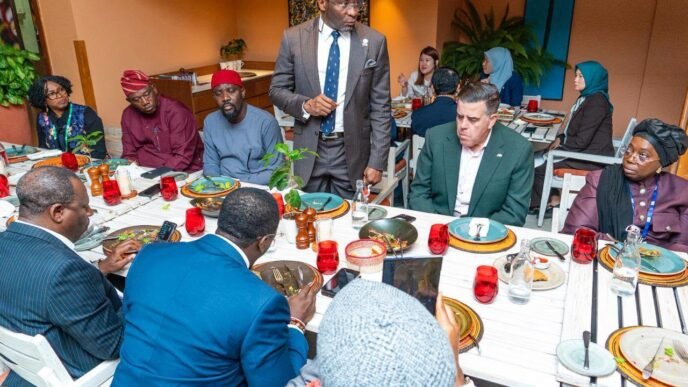
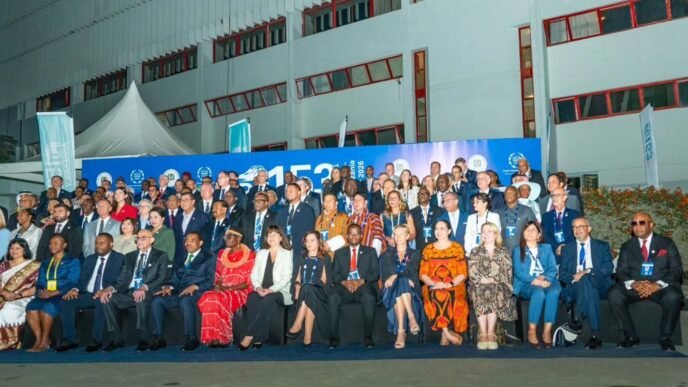
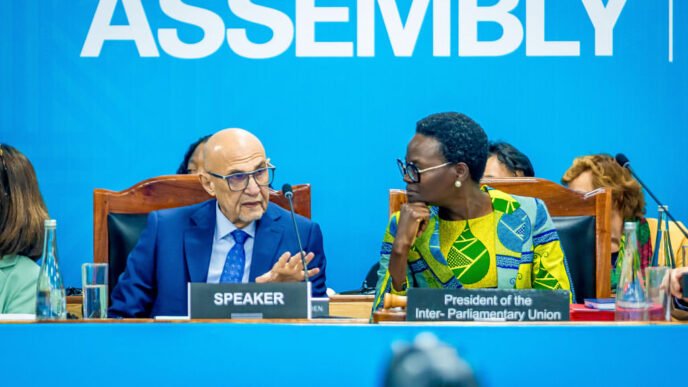
153rd IPU ASSEMBLY – ARUSHA, TANZANIA
Session: Forum of Women Parliamentarians
Chair: Madam President, Forum of Women Parliamentarians
Date: October 2026 – Morning Session
1.0 INTRODUCTION & SESSION OVERVIEW
The morning session of the 153rd IPU Assembly was convened under the Forum of Women Parliamentarians.
The session addressed two linked agenda items:
A. Addressing Violence Against Women in Politics: Institutional responses and good practices by parliaments.
The session discussed combating violence against women in politics and strengthening Women’s Caucuses in parliaments around the world. The Secretary cited instances on how far the IPU has gone to assist and strengthen parliaments in institutional response, protection mechanisms, and support systems for women MPs.
B. Item 4: Contribution to the work of the 153rd Assembly from a gender perspective.
The substantive resolution under consideration was:
“Inclusive social development for all. Parliamentary strategies to promote the rights and empowerment of persons living with disabilities.”
Presented by Co-Rapporteurs of the resolution: Mr. C. Lohr (Switzerland), Ms. F. Incou (Türkiye) and Ms. C. Mumma (Kenya).
The Assembly emphasized passionate and proper oversight on persons with disabilities, strengthening human relationships with persons living with disabilities, and supporting and empowering them.
At this stage, women from various parliaments around the world were allowed to contribute on behalf of their country on the guiding questions below.
2.0 GUIDING QUESTIONS FOR CONTRIBUTIONS
- How can parliaments ensure that targeted measures to promote the rights and inclusion of persons with disabilities take into account the specific needs of women with disabilities and the intersecting forms of discrimination they face?
- What targeted measures have proven effective in empowering women with disabilities in areas such as education, employment and access to justice?
- What good practices exist to ensure due representation of women with disabilities in civil society organizations and in public consultations?
- How can the representation of women with disabilities in parliament be ensured?
- Are “nested” quotas – such as parity requirements within reserved seats for persons with disabilities – the best answer?
- Are women’s and disability caucuses in parliament supporting the inclusion of the voices of women MPs with disabilities?
3.0 COUNTRY CONTRIBUTIONS – VERBATIM TRANSCRIPTS FROM TODAY
Below are all verbatim contributions extracted today and incorporated into the morning record.
3.1 Contribution: MENA Region / Persons of Determination – Quotas, Higher Education & Tax Exemptions
This contribution focused on legislative quotas and economic empowerment.
“If it exceeds twenty-five persons, one of them must be a person with determination and disability. For higher education, university fees are exempted by ninety percent for a male or female student if he or she has this disability and seventy-five percent on parallel programs. What is meant by parallel program is the program that grants additional teaching staff. There are also tax exemptions granted to persons with disabilities.”
Interpretation: The delegate outlined a quota system where organizations above 25 staff must include one person with disability, a 90% exemption on regular university fees and 75% on parallel programs for students with disabilities, plus tax exemptions for persons with disabilities.
3.2 Contribution: Violence Against Women with Disabilities
“By drawing attention to the reality of women with disabilities that experience violence. Thank you for listening. Thank you.”
This brief intervention re-centered the session on the intersection of gender-based violence and disability.
3.3 Contribution: UGANDA – Affirmative Action, Education, Employment & Justice
Uganda presented a structured three-pillar approach.
“Uganda has adopted affirmative action measures to promote representation of persons with disabilities in parliament and local government. Our experience demonstrates that representation creates an important foundation but it must translate into meaningful participation, influence and improved livelihoods. There are three priority areas. Education: Uganda’s disability legislation provides for inclusive education and reasonable accommodation. We need to strengthen scholarships, assistive devices, accessible learning materials, sign languages, etc. Second, employment and economic empowerment: Our legislation prohibits discrimination in employment and provides for reasonable accommodation and affirmative succession. Disability-focused financing and economic empowerment programs have also created opportunities for persons with disability. However success should be measured not simply by the funds distributed but by how many women with disabilities obtain sustainable employment, establish viable businesses and achieve financial independence. Access to justice. Women with disabilities [must be supported to] report…”
Key takeaways from Uganda: Affirmative seats are not enough; success must be measured by participation, influence, and livelihoods. Priorities: inclusive education with assistive devices, anti-discrimination in employment, and access to justice.
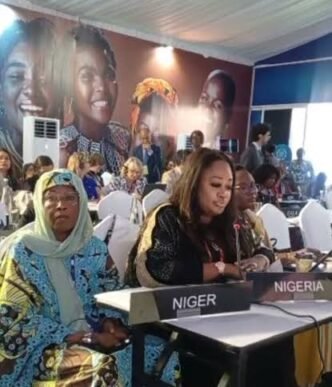
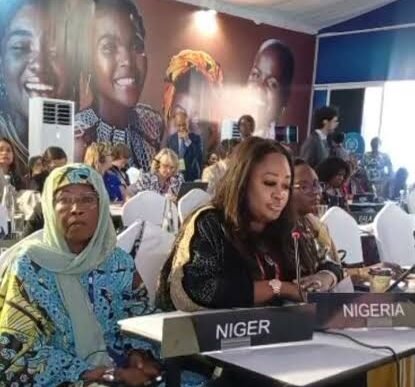
3.4 Contribution: NIGERIA – Data, Legislation & Reserved Seats
Delegate: Nigeria [Women’s Delegation] – 153rd IPU Assembly, Arusha
Full verbatim transcript as delivered:
“I bring you greetings from Nigeria. 237 million people, women and girls are approximately 49.4% of our population, any part of the Nigerian story is therefore the story of women. Within that story, millions of women dealing with disabilities with voices, talents and leadership must be fully recognized. Nigeria’s 2024 demographic and health survey shows that among women aged 15 and above approximately 15.5% experience at least some difficulty in one or more functional domains while 2.6% have a lot of difficulty or cannot function at all in at least one domain. Nigeria has responded with action. We have enacted the Discrimination Against Persons with Disabilities (Prohibition) Act and established the National Commission for Persons with Disability. At the same time our National Assembly is advancing the Special Seats for Women Bill, a historic constitutional reform to increase women’s representation in the National Assembly and State House of Assembly. Our Speaker has also expressed support for pursuing reserved parliamentary representation for persons with disabilities. Thank you very much.”
Analysis of Nigeria’s position:
- Provides statistical evidence: 15.5% some difficulty, 2.6% severe difficulty among women 15+.
- Legislative action: Disability Prohibition Act + National Commission.
- Parliamentary reform linkage: Special Seats for Women Bill + proposal for reserved representation for persons with disabilities, linking gender quotas and disability inclusion — directly responding to the question on “nested quotas.”
4.0 SYNTHESIS & CONCLUSION OF MORNING SESSION
The morning session established a clear consensus:
- From Quota to Quality: Representation through affirmative action and nested quotas (women within disability seats) was affirmed by Uganda and Nigeria, but delegates stressed it must move beyond numbers to meaningful influence.
- Education & Employment: The MENA/UAE and Uganda contributions aligned on 90% fee waivers, scholarships, assistive technology, sign language, and non-discriminatory employment with reasonable accommodation.
- Intersectional Violence: The session linked back to Topic A – violence against women in politics – noting women with disabilities face double vulnerability and need specific reporting and protection mechanisms.
- Parliamentary Good Practice: Strengthening Women’s Caucuses and Disability Caucuses to jointly amplify women MPs with disabilities, and ensuring their inclusion in civil society consultations and public hearings.
The session ended with appreciation for the Co-Rapporteurs’ paper and a commitment to integrate the gender perspective on disability into the final Assembly resolution on Inclusive Social Development.
Report by Mr. Ekeh Nnanyere Macfred, MNIPR,
Head, Media Unit & Representative of the National Assembly Library at IPU 153, Arusha, 2026.