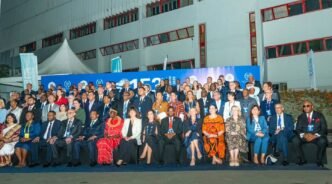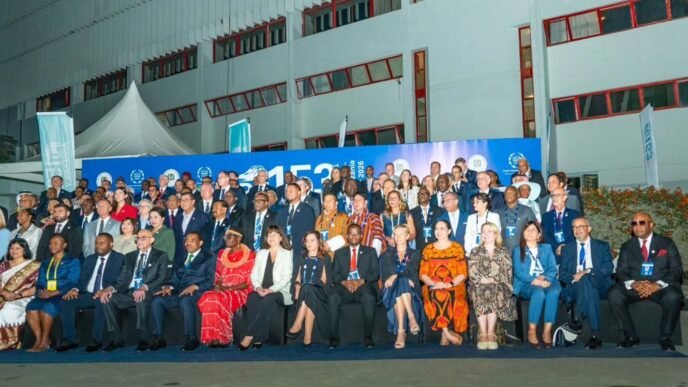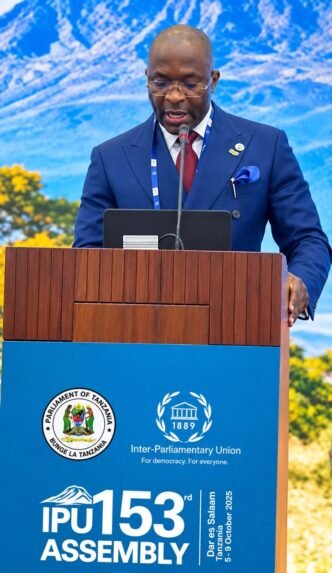
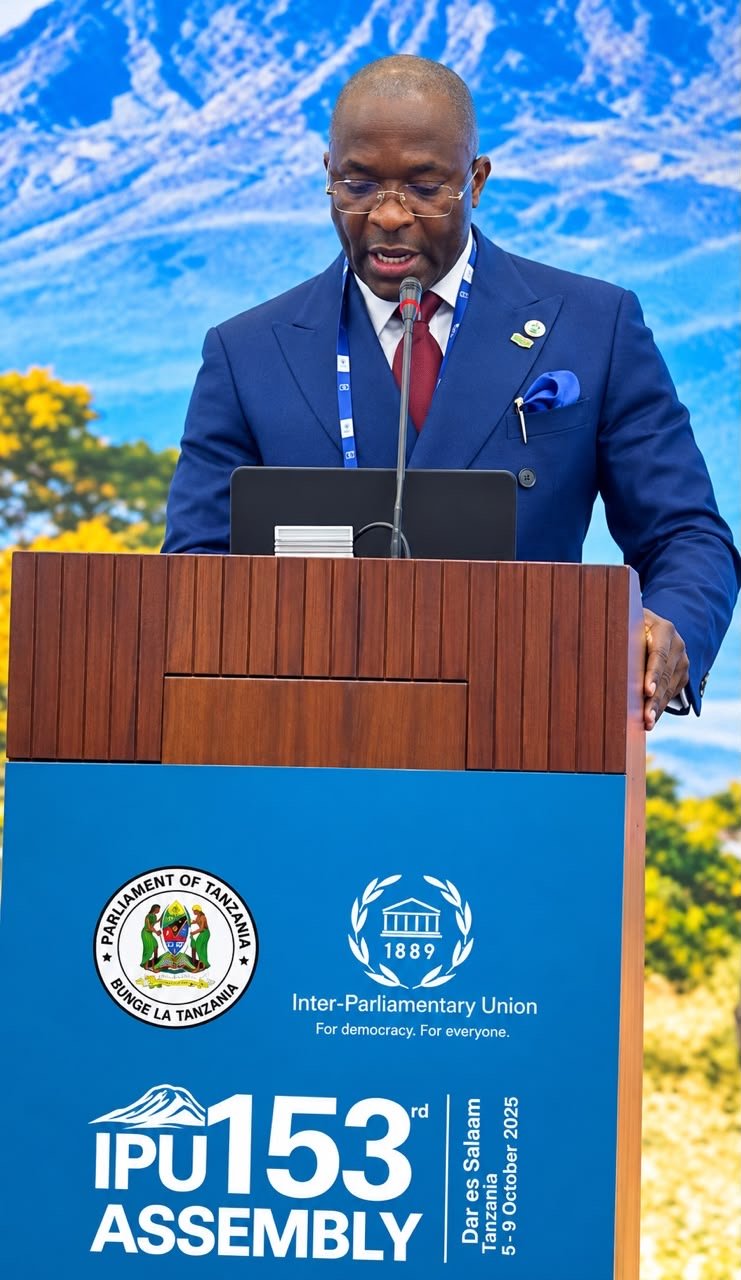
The Deputy Speaker of the House of Representatives, Rt. Hon. Benjamin Okezie Kalu, has urged parliaments worldwide to move beyond diplomatic declarations and adopt structured, bankable legislative interventions to combat climate-related disasters and build community resilience.
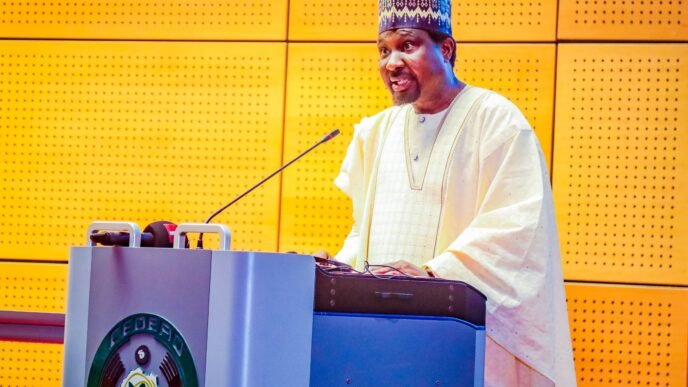
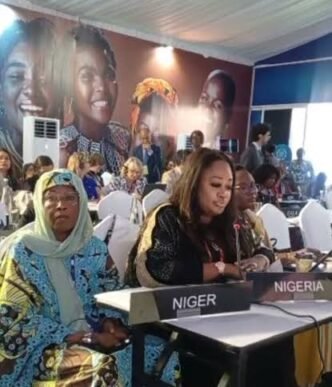
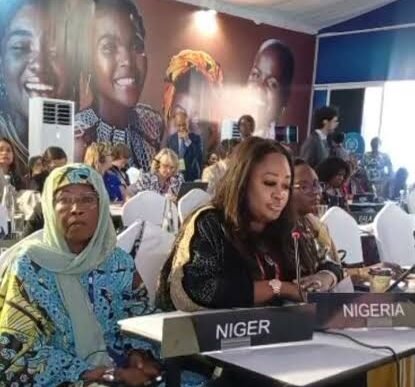
Addressing the 153rd Assembly of the Inter-Parliamentary Union (IPU) in Arusha, Tanzania, during a high-level debate on urgent parliamentary climate action, Kalu emphasized that lawmakers must act as architects of legal certainty and public accountability.
“As legislators, we should understand that legislation must not remain a statement of intent. It must become an instrument of delivery,” Kalu stated. “Lawmakers are not just observers of the climate crisis, but architects of the legal certainty and public accountability required for a resilient, competitive, and sustainable economy.”
To bridge the gap between climate ambition and practical financial implementation, Kalu proposed a structured global intervention anchored on two major pillars:
An Investor-Ready Project Pipeline: Spanning clean energy, transport, agriculture, resilient infrastructure, and the circular economy.
A Transaction-Support Platform: Designed to move viable projects efficiently from initial conception to bankability, financing, and execution.
Highlighting the devastating local realities of erratic rainfall, coastal erosion, and urban flooding, the Deputy Speaker stressed that for Nigeria, Africa’s largest economy, climate action is fundamentally a livelihood and economic imperative rather than an abstract environmental concern.
Recalling Nigeria’s commitment at COP26 to achieve net-zero emissions by 2060 under its Energy Transition Plan, Kalu revealed that realizing this development-centred pathway requires approximately $500 billion in capital investment above business as usual spending. He framed this figure not as a financing gap, but as an expansive investment horizon for global partners.
Key priority investment sectors highlighted by the Deputy Speaker include:
Clean Energy & Infrastructure: Distributed renewable energy, solar mini-grids, battery storage, clean cooking solutions, and transmission upgrades.
Agriculture & Urban Transit: Climate-smart agriculture, cold-chain logistics, electric mobility, mass transit, and waste-to-value systems.
Adaptation & Resilience: Flood-control infrastructure, coastal protection, nature-based solutions, and resilient housing.
Kalu outlined several legislative measures being pursued by the Nigerian National Assembly, including strengthening the implementation of the Climate Change Act, monitoring public climate expenditure, and establishing robust green-finance and carbon-market frameworks. He also emphasized reforms aimed at enhancing investor protection, contract enforcement, and transparency across green project approvals.
Reiterating the country’s commitment to inclusivity, Kalu concluded:
“Our message is simple: Nigeria’s green transition must be a just transition. It must expand access to affordable energy, create decent work, support communities, equip young people with new skills, promote women’s participation in the green economy, and ensure that no region or social group is left behind.”