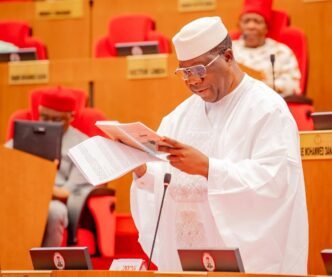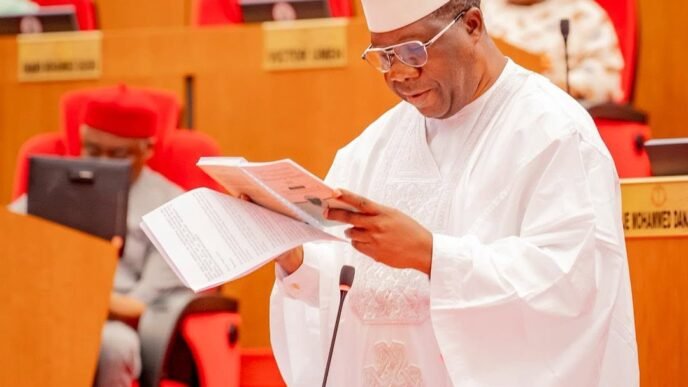
The Senate has rescinded its earlier decisions on two major legislative bills returned by President Bola Ahmed Tinubu and subsequently passed the amended legislation following a joint legal review with the Federal Ministry of Justice.
The bills passed during Tuesday’s plenary session are the Raw Materials Research and Development Council Act (Amendment) Bill, 2026, and the Chartered Institute of Purchasing and Supply Management of Nigeria (Establishment) Act (Amendment) Bill, 2026.
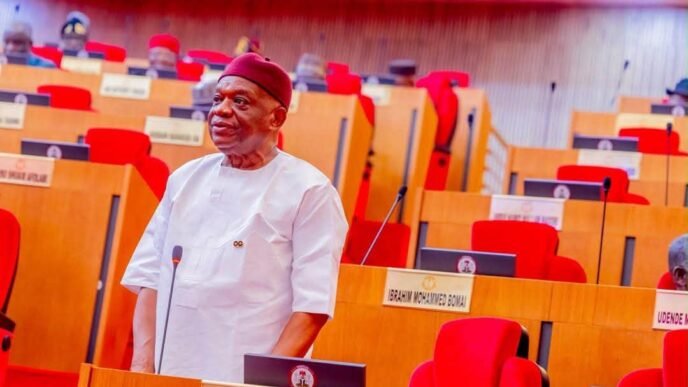
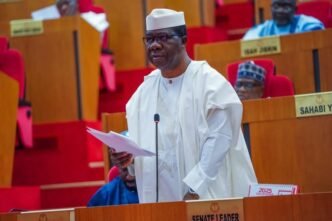
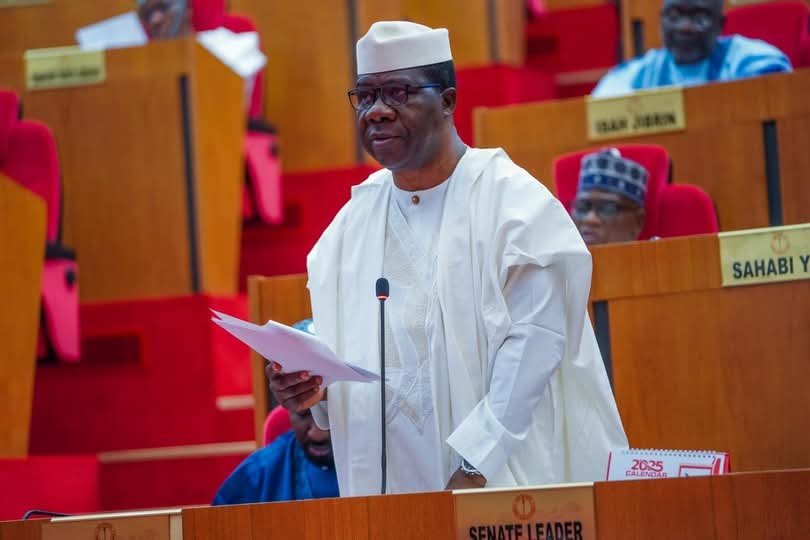
The legislative action followed a motion moved by Senate Leader, Senator Opeyemi Bamidele (Ekiti Central), who explained that after the bills were initially passed and transmitted to the executive, the Federal Ministry of Justice identified key technical and legal drafting issues requiring further clarification.
To address these observations, a technical committee comprising representatives from the Senate, the House of Representatives, and legal drafting experts from the Federal Ministry of Justice and the Office of the Attorney-General of the Federation was established to refine the legislative text.
Pursuant to Orders 1(b) and 52(6) of the Senate Standing Orders, the Upper Chamber rescinded its previous decisions and recommitted both bills to the Committee of the Whole. Following a detailed clause-by-clause review and approval, Senate President Godswill Akpabio announced the formal passage of both bills after their third readings.
Key Highlights of the Passed Legislation:
Raw Materials Research and Development Council Act (Amendment) Bill, 2026: Amends Act No. 28 of 2022 to strengthen the legal framework for protecting, developing, and processing Nigeria’s domestic raw materials, directly bolstering local manufacturing capacity.
Chartered Institute of Purchasing and Supply Management of Nigeria (Establishment) Act (Amendment) Bill, 2026: Updates Act No. 21 of 2007 to modernize professional procurement practices across Nigeria, aligning the institute’s regulatory framework with global best practices and international standards.
With these technical and legal alignments complete, both bills will be re-transmitted to President Bola Tinubu for executive assent.