
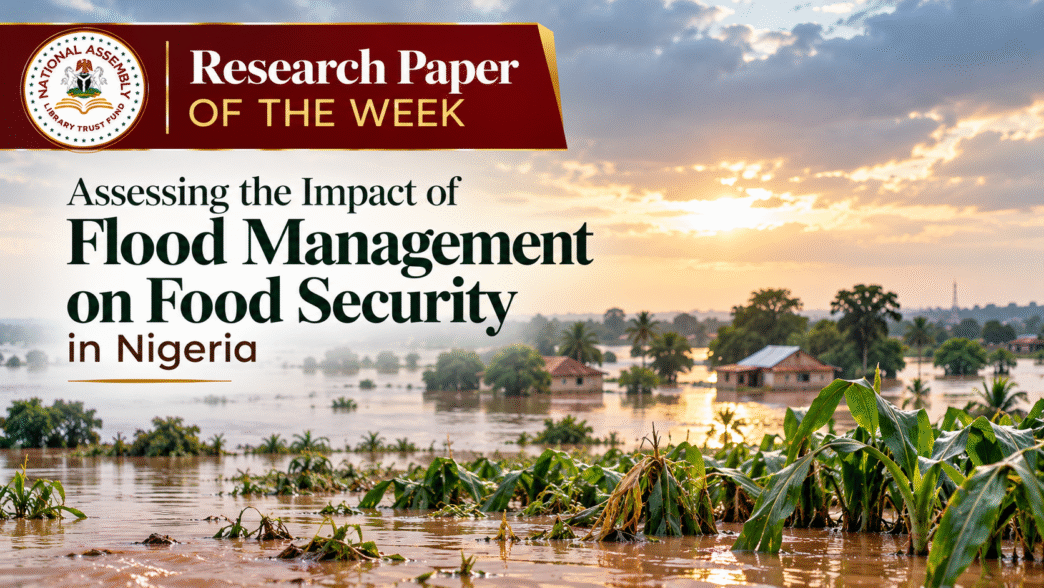
Flooding in Nigeria is far more than an environmental crisis; it is a direct driver of food insecurity across the nation. When severe floods hit agricultural heartlands, the ripple effects damage every link in the supply chain—destroying standing crops, killing livestock, washing away critical transport routes, and compromising storage facilities before produce ever reaches local markets.
According to the Food and Agriculture Organization (FAO), food security relies on four distinct pillars: availability, access, utilization, and stability. Flooding systematically undermines all four by crippling local yields, disrupting market access, threatening food safety, and creating severe price volatility. Effective flood risk management is not merely an environmental safeguard—it is an economic necessity.
Visit our eLibrary to access the full report and explore more research publications
Policy vs. Reality: Structural Vulnerabilities
As the Intergovernmental Panel on Climate Change (IPCC) continues to warn of escalating climate risks across Africa, Nigeria’s vulnerability is compounded by structural deficiencies. Unplanned urbanization, inadequate drainage networks, widespread deforestation, poor waste management, and river overflow turn seasonal rainfall into catastrophic disasters.
While Nigeria’s Climate Change Act of 2021 established a strong legal framework—most notably through the creation of the National Council on Climate Change and the National Climate Change Action Plan—policy on paper has yet to translate into resilience on the ground. Bridging this gap requires sustained funding, cross-agency coordination, modern infrastructure, and uncompromising policy implementation.
Measuring Impact: What Real Progress Looks Like
To determine whether flood interventions are truly protecting the food supply, Nigeria must shift from reactive disaster response to evidence-based evaluation. Key performance indicators must track concrete metrics, including:
- Agricultural Loss: Total percentage of inundated farmland and crop/livestock loss per household.
- Supply Chain Resilience: Average days of flood-related transport disruptions and variations in staple food prices.
- Infrastructure & Warning Systems: Timeliness and localized reach of early warning alerts, alongside the completion and maintenance rates of public drainage projects.
- Household Well-being: Seasonal shifts in meal frequency, nutritional intake, and reliance on distress coping strategies.
Data tools such as Nigeria’s Annual Flood Outlook, combined with routine agricultural market surveys, can provide a clear baseline. Consistently publishing these findings will hold policymakers accountable and ensure public investments deliver tangible outcomes.
Building Long-Term Climate Resilience
Mitigating these risks demands proactive, multi-sectoral planning. Key interventions must include:
- Expanding climate-smart agricultural practices and flood-tolerant crop varieties.
- Upgrading rural infrastructure (flood barriers, elevated storage facilities, and resilient feeder roads).
- Strengthening early warning communication down to the smallholder farmer level.
- Integrating climate risk assessments into national agricultural development strategies.
Ultimately, flood management cannot be treated as an isolated emergency response exercise. Preventing water from entering streets is only half the battle; the true measure of success lies in protecting farmers, stabilizing food prices, and safeguarding the livelihoods of millions of Nigerians.
Adapted from the National Assembly Library research report, “An Assessmet of Flood Management on Food Security in Nigeria” by Victoria Udotong (25 May 2026)
Visit our eLibrary to access the full report and explore more research publications