
The Senate has assured the nation that legislation establishing State Police Services will be officially enacted before the end of the year, following the successful attainment of the required constitutional threshold across state legislatures.
The threshold was officially met after the Ondo State House of Assembly passed the Constitution of the Federal Republic of Nigeria, 1999 (Sixth Alteration) Bill, 2026, becoming the 24th state legislature to approve the measure. Ondo joins 23 other states including Osun, Lagos, Rivers, Kano, Kaduna, Delta, and Enugu to achieve the mandatory two-thirds concurrence of the 36 state assemblies required for constitutional amendments.
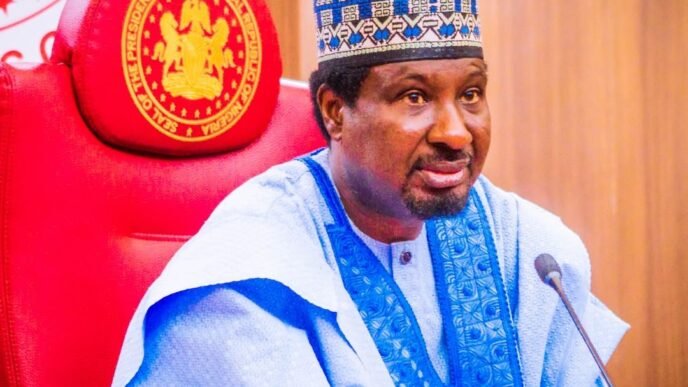
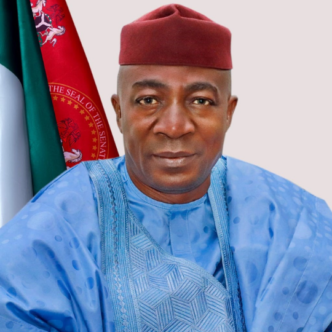
Speaking on behalf of the upper chamber, Chairman of the Senate Committee on Media and Public Affairs, Senator Yemi Adaramodu, confirmed that the National Assembly is determined to finalize the legislative process before adjourning for the Christmas break.
We have promised Nigerians that before the end of this 10th National Assembly, a new police law will be enacted… Before we leave for Christmas, it will be done expeditiously. This is a popular bill, we know it’s what Nigerians want and need, so we are not going to waste a minute on it.
Sen. Yemi Adaramodu.
The timeline aligns with parallel executive action. The Presidential Working Group on the National Policing Bill, chaired by Chief of Staff to the President Femi Gbajabiamila, has submitted the draft National Policing Bill, 2026 along with 29 consequential amendment bills to the Ministry of Justice for legislative review prior to formal transmission to the National Assembly.
The proposed constitutional amendment seeks to alter Section 214 of the 1999 Constitution, replacing the single centralized Nigeria Police Force with a Federal Police Service and individual State Police Services.
Furthermore, proponents emphasize that state level policing will leverage local knowledge, indigenous officers, and community rooted intelligence to tackle localized threats, including banditry, kidnapping, and insurgency.
Lawmakers underscored that while numerous anti crime statutes have been passed, effective localized enforcement remains the missing link to securing communities nationwide.
The Senate pledged to conduct final harmonization conferences and engage all critical stakeholders to establish a robust, community focused operational framework.
Highlighting the necessity of the reform, Senator Victor Umeh (Anambra Central) noted that decentralization is critical given Nigeria’s vast geographical expanse:
“We cannot continue to have one central police force to provide security from Kebbi and Calabar to Ikot Abasi. Every security issue is local. Having officers who are indigenes of the states they police will transform intelligence gathering and enable swift response times.”
In Ondo State, Speaker of the House of Assembly, Rt. Hon. Olamide Oladiji, called the establishment of state policing long overdue, adding that local security structures will significantly bolster proactive crime prevention and rapid threat intervention.
Following the concurrence of the state assemblies, the verified instruments of passage will return to the National Assembly for formal verification, conference harmonization, and final assent into law.