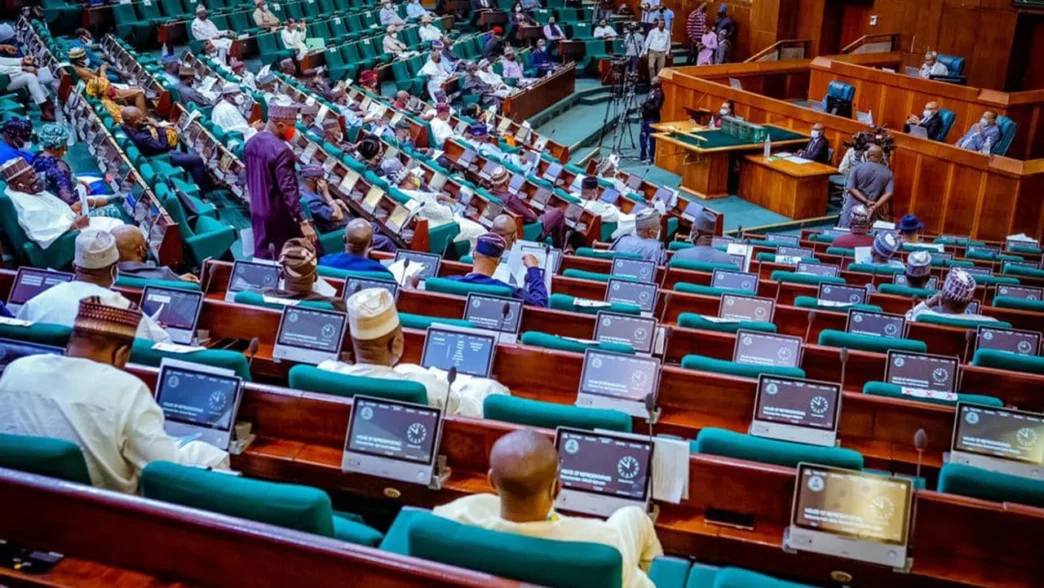
The House of Representatives on Thursday passed the Executive Bill seeking to establish State Police Services across the nation in a decisive step toward decentralizing Nigeria’s security framework through a historic voting process.
The passage of the Bill, officially titled “A Bill for an Act to Alter the Constitution of the Federal Republic of Nigeria, 1999 to Provide for the Establishment of State Police Services and for Related Matters (HB. 2797)”, brings the country significantly closer to implementing a dual policing system designed to enhance state-level law enforcement and curb rising national security threats.
A total of 311 lawmakers participated in the constitutional voting process. The Speaker of the House, Rt. Hon. Tajudeen Abbas, confirmed that 276 members voted physically in the chamber while 35 participated virtually.
To pave the way for a unified legal framework, the House rescinded its earlier constitutional amendment proposal from June 11, dissolved its 12-member reconciliation committee, and adopted the executive-backed bill recently submitted by President Bola Ahmed Tinubu.
The House’s approval aligns with the earlier passage of a similar version by the Nigerian Senate, signaling strong bicameral consensus on security reform.
The final passage followed the consideration and adoption of the report submitted by the Committee on the Review of the 1999 Constitution, chaired by Deputy Speaker Benjamin Kalu.
The executive proposal, transmitted to the National Assembly by President Bola Tinubu, builds on past legislative attempts while embedding critical safeguards to ensure accountability, prevent abuse, and guarantee operational efficiency between federal and state forces.
The creation of state-controlled police units alongside the existing Nigeria Police Force (NPF) addresses a long-standing public demand. Proponents emphasize that devolving police powers will:
- Deepen local context awareness to preempt criminal activities.
- Build trust and foster closer cooperation between residents and law enforcement officials.
- Provide state governors and local authorities with immediate operational capacity to combat threats such as terrorism, kidnapping, and banditry.
With both chambers of the National Assembly now aligned, the constitutional amendment moves to the next stages of the ratification process, bringing Nigeria to the brink of one of its most transformative governance reforms in decades.