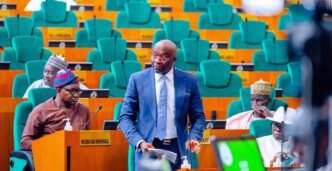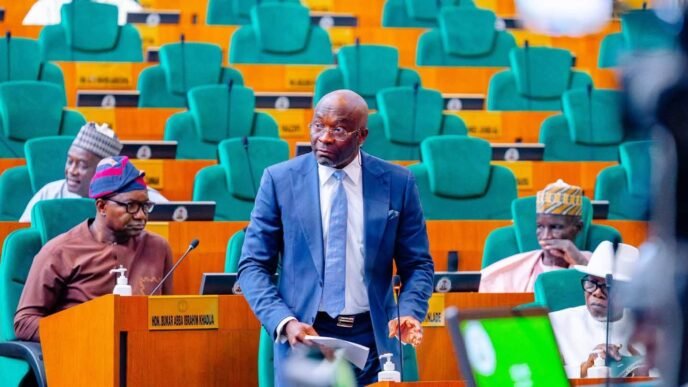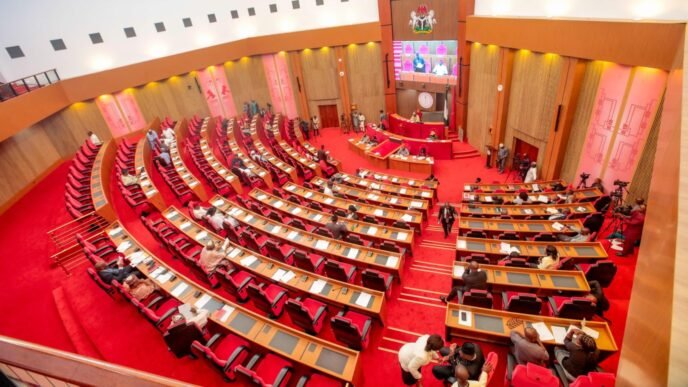
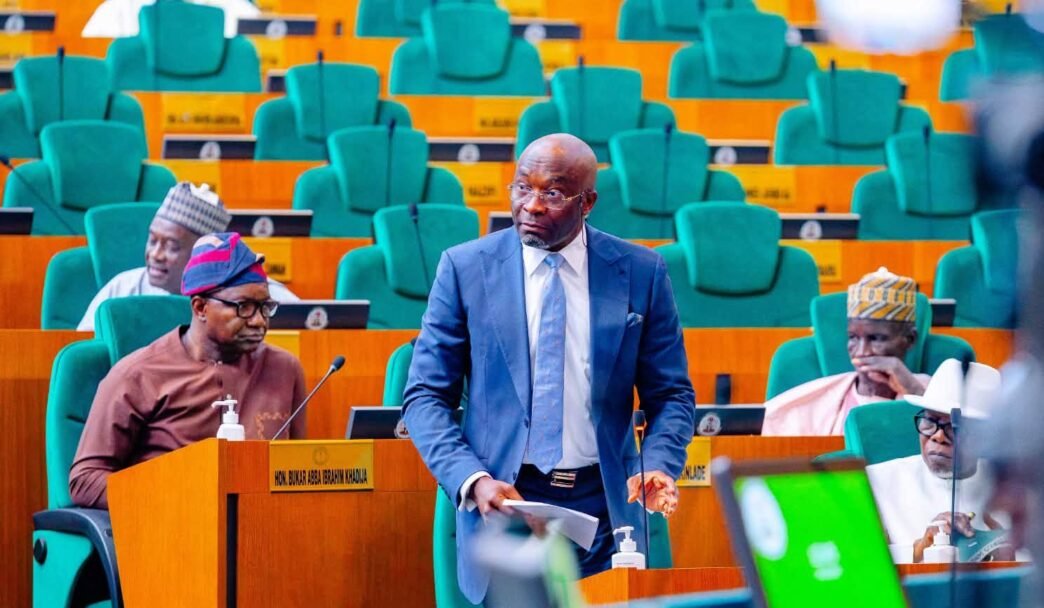
The House of Representatives on Tuesday, November 24, 2026, approved for second reading a Bill sponsored by Deputy Speaker, Rt. Hon. Benjamin Kalu and six colleagues to amend the 2023 National Social Investment Programme Agency Act. The reform seeks to boost the agency’s efficiency and strengthen how social protection programmes are coordinated, delivered, and monitored across Nigeria.
At its core, the proposed bill aims to expand the Agency’s structure by incorporating the Grant for Vulnerable Groups Programme and the National Social Safety-Net Coordinating Office. Under this framework, the Coordinating Office will serve as the central hub for managing data and harmonizing national social safety-net initiatives across the country.
Leading the debate on the Bill, Deputy Speaker Kalu emphasized that a social investment scheme’s true success does not lie in its budgetary allocation or the sheer number of initiatives it runs. Instead, he argued, its effectiveness must be judged by the tangible difference it makes in the lives of the vulnerable citizens it is meant to support.
He emphasized that the proposed reforms are built on the understanding that impactful social investment cannot rely on isolated programmes working in silos. Rather, it requires a unified framework featuring proper beneficiary data management, seamless programme coordination, and active collaboration with state and local governments.
Highlighting the need to prioritize tangible relief for citizens and adapt the agency to Nigeria’s evolving social protection demands, Kalu said:
“The strength of a social investment programme is ultimately measured not by the size of its budget, nor by the number of programmes it carries, but by whether the vulnerable citizen it was designed to reach can actually feel its impact. Social investment is, at its core, a promise of the Nigerian State to stand between vulnerability and destitution, and to ensure that temporary hardship does not become permanent exclusion”.
He noted that while the National Social Investment Programme Agency was created to give institutional backing to that commitment, the growing scale and complexity of Nigeria’s social protection landscape now demand stronger systems for coordinating, executing, and monitoring these initiatives. Consequently, the bill is designed to overhaul and refocus the agency for greater efficiency and performance, establishing clearer institutional roles and tighter coordination frameworks.