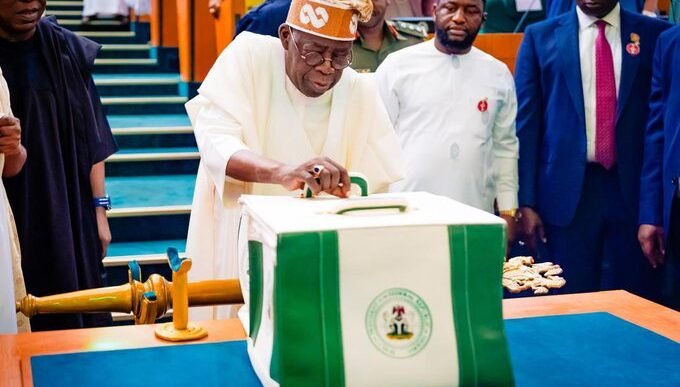
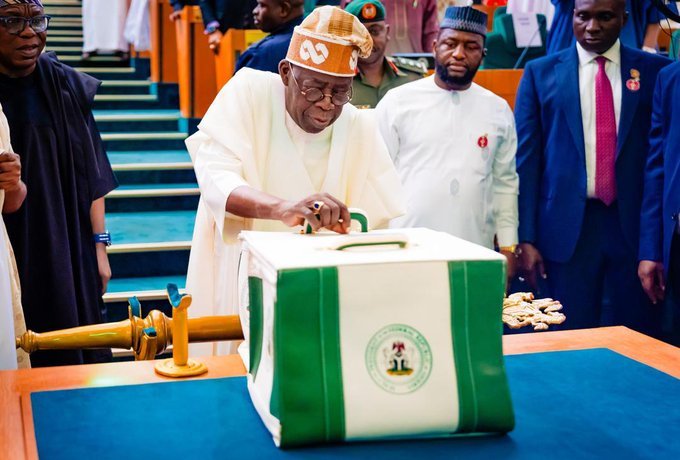
January 3, 2026-The recently re-enacted 2025 Appropriation Act represents a bold attempt by the Federal Government to shift Nigeria’s fiscal balance from consumption to investment. With a revised total expenditure of ₦48.31 trillion, the Act allocates a substantial ₦16.76 trillion to capital expenditure through the Development Fund. This allocation is central to the administration’s strategy to stimulate economic growth and reduce the national infrastructure deficit.
Bridging the Infrastructure Gap
The “Renewed Hope” agenda identifies infrastructure—specifically in transportation, energy, and digital connectivity—as the primary catalyst for job creation. The re-enacted budget provides the funding necessary for “legacy projects” such as the Lagos-Calabar Coastal Highway, the Sokoto-Badagry Road, and the completion of various rail corridors.
A critical feature of the re-enacted 2025 budget is the 30% capital implementation target. President Tinubu, in his transmittal letter to the National Assembly, noted that the revised figures were designed to ensure that MDAs have the liquidity to reach this benchmark. By extending the implementation window to March 2026, the government is ensuring that contractors have a stable funding environment to continue work during the “dry season” construction window.
Sectoral Breakdown of Capital Spending
Under the re-enacted 2025 framework, the following sectors have received prioritized capital funding:
Infrastructure (Works & Housing): ₦5.8 trillion for road networks and bridge repairs.
Energy and Power: ₦2.1 trillion to improve grid stability and expand rural electrification.
Defense and Security: ₦3.5 trillion for the procurement of hardware and the rehabilitation of military barracks.
Agriculture and Food Security: ₦1.8 trillion for irrigation projects and agro-processing hubs.
Ending the “Lapsed Funds” Syndrome
Historically, many Nigerian infrastructure projects were stalled because unspent capital funds were required to be returned to the treasury at midnight on December 31st. The re-enactment and extension to March 2026 solve this problem. It allows the Ministry of Works and other key agencies to utilize the full weight of their 2025 appropriations without the artificial cutoff that often led to “festive season” project abandonment.
The National Library of Nigeria will host a public exhibition later this year showcasing the detailed project lists contained in the re-enacted budget schedules. This move towards granular transparency is intended to allow citizens and civil society groups to track exactly how the ₦16.76 trillion capital fund is being deployed in their respective regions.