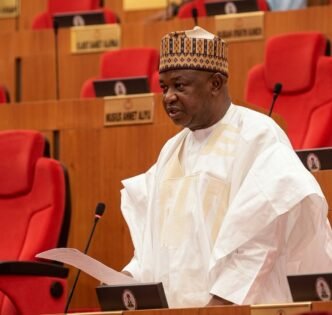
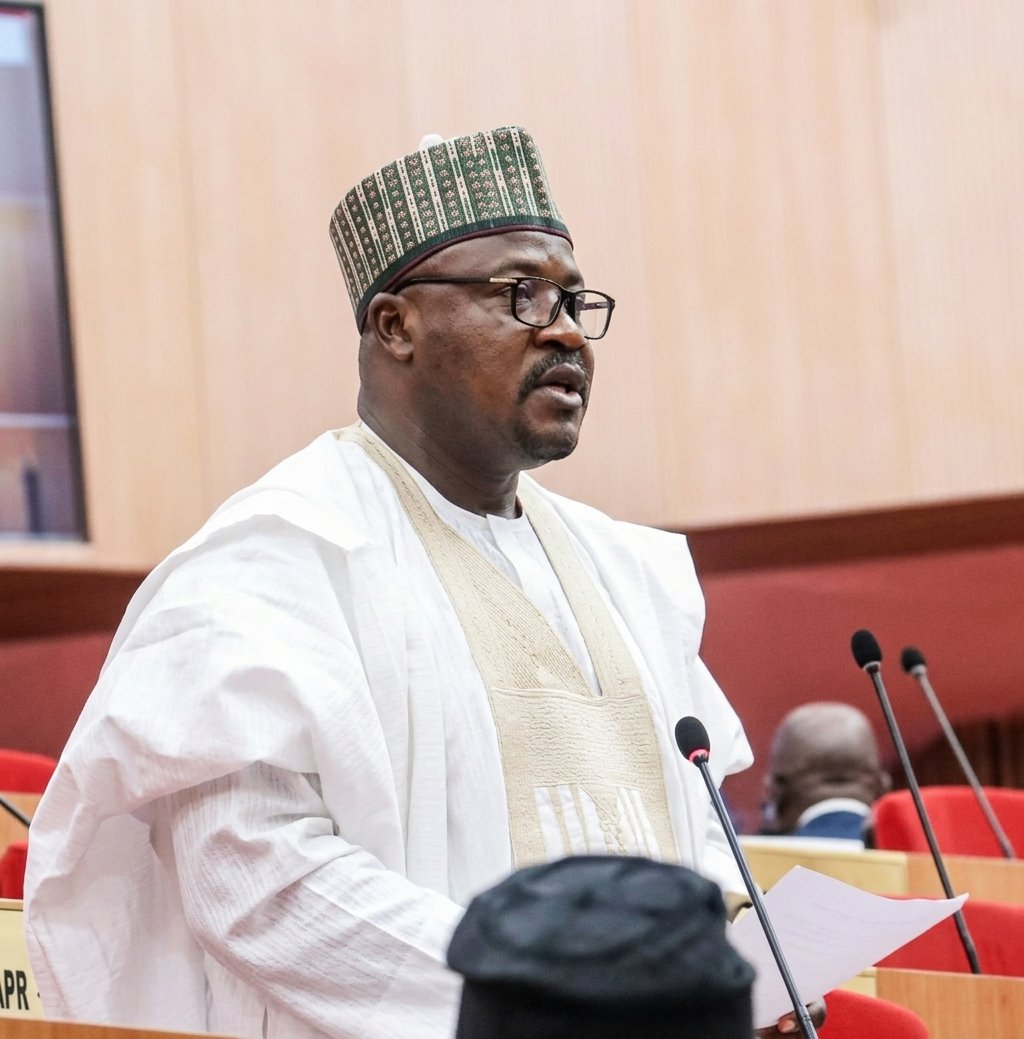
The Chairman of the Senate Committee on Petroleum Resources (Downstream), Senator Abdulrahman Kawu Sumaila, has expressed full support for the Nigeria Immigration Service (NIS) centralised passport production system, stating that the initiative will strengthen national security, improve operational efficiency, and eliminate middleman extortion.
Senator Kawu made these remarks following a fact-finding delegation visit to the NIS Headquarters in Abuja. The visit was prompted by public concerns and constituent complaints particularly from Kano and other northern states regarding the alleged relocation of local passport production centres.
Following detailed briefings and a guided walkthrough of the central production process by senior immigration officials, Senator Kawu confirmed that public concerns stemmed from misconceptions surrounding the service’s technological migration.
“For our national security, we need to have a centralised system that will produce our passports. The passport is one of the most important documents for any Nigerian,” said Senator Kawu. “They explained the process to us in detail, what they have achieved so far, and what they are currently doing. Their objective is to adopt international best practices. I insisted that I must come here, witness the process myself, and return to tell my constituents that there is no cause for alarm. We will solidly support the Nigeria Immigration Service.”
The Assistant Comptroller-General in charge of Passports and Travel Documents, Titilayo Olaiya, noted that the reform originated from a 2024 comprehensive assessment aimed at ensuring uniform security and integrity for Nigeria’s travel documents.
Key details of the ongoing NIS centralised passport production reform include:
Enhanced Security & Efficiency: Centralised oversight prevents criminal exploitation of Nigerian travel documents while streamlining output via a facility capable of producing approximately 1,000 passports per hour.
Elimination of Extortion: Direct electronic processing removes opportunities for third-party touts to extort applicants under the guise of expedited processing.
Continued Local Office Operations: All regional passport offices remain fully operational. Applicants will continue to complete enrollment, application submission, and biometric capture at their local centres.
Phased Rollout: The migration is being implemented in stages. Phase Four includes locations such as Kano, while high-volume centres including Lagos and key foreign missions (across the US, UK, and Canada) will complete their transition before the end of the year.
Direct Delivery: Once processed centrally, completed passports are dispatched back to the issuing office or delivered directly to applicants via secure courier services.
To ensure broad public awareness, Deputy Comptroller-General of Visa and Residency, Dr. Franca Nwanneka, confirmed that the NIS is automating key processes and launching public sensitisation campaigns in English, Pidgin, and Hausa. She urged lawmakers and community leaders to assist in educating grassroots citizens on the upgraded workflow.
During the visit, Senator Kawu also advocated for expanded consular assistance for Nigerians residing in Saudi Arabia. In response, the Service affirmed that it continues to deliver passport services through the Nigerian Consulate in Jeddah, complemented by periodic intervention exercises at the Embassy in Riyadh.