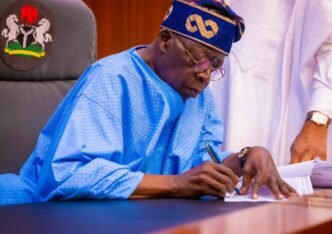

February 18, 2026 — In a move to plug massive financial leakages, President Bola Tinubu has signed a landmark Executive Order stripping the Nigerian National Petroleum Company Limited (NNPCL) of its long-standing power to deduct billions in fees before remitting funds to the federation.
The directive, gazetted on February 13, 2026, mandates the direct remittance of all oil and gas revenues—including taxes, royalties, and profits—to the Federation Account. This effectively bypasses the NNPCL, which previously acted as a middleman for these payments.
The Presidency characterized the move as a restoration of constitutional rights for federal, state, and local governments. Under the Petroleum Industry Act (PIA) of 2021, the NNPCL had been retaining significant portions of oil revenue, which the administration now deems excessive:
30% Management Fee Scrapped: The NNPCL will no longer collect a 30% fee on profit oil and gas from Production Sharing Contracts (PSCs). The government argued this was “unjustified” as the company already retains 20% of its profits for working capital.
Frontier Exploration Fund Redirected: The 30% of profit oil previously earmarked for “speculative” inland basin exploration will now be paid directly into the Federation Account.
Gas Flare Penalties: Payments of gas flaring penalties into the Midstream and Downstream Gas Infrastructure Fund (MDGIF) have been suspended. These proceeds will now flow into the common federation pool.
The reform comes amid a “sustained decline” in net oil revenue inflows, despite stable production levels and favorable global prices. Government officials revealed that under the previous PIA framework, over two-thirds of potential remittances were being diverted through various deductions and charges.”
The fundamental purpose of the nation’s oil and gas sector is to convert hydrocarbon resources into sustainable revenues that benefit the broader economy,” a State House statement read. “This requires revenue flows that are transparent and constitutionally compliant.”
To ensure the transition is seamless and transparent, the President has approved several structural changes:
Measure _ Detail
Implementation Committee: Chaired by the Minister of Finance and Coordinating Minister of the Economy.
Direct Payments: PSC contractors must now pay royalties and taxes directly to fiscal authorities.
Regulatory Interface: The Nigerian Upstream Petroleum Regulatory Commission (NUPRC) will now be the primary interface for integrated operations.
Legal Review: The President signaled a forthcoming comprehensive review of the PIA to fix “fiscal anomalies.”
Impact on the NNPCL: The order aims to reposition the NNPCL strictly as a commercial entity. By removing its role as a “concessionaire” that could influence operating costs while simultaneously functioning as a commercial operator, the administration hope to eliminate competitive distortions in the energy market.