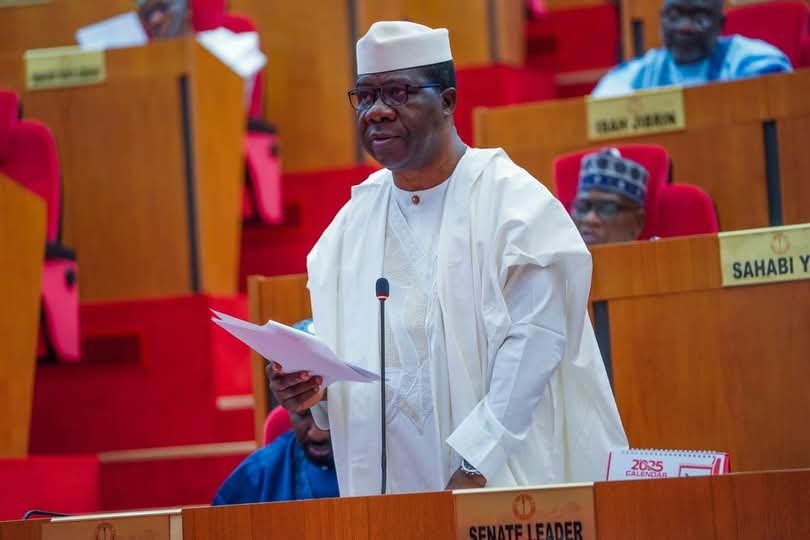
Thursday, December 4, 2025 | The Senate has taken a historic step to boost the welfare of the Nigeria Police Force (NPF) by passing the Nigeria Police Force Pension Board Bill. This legislation will pave the way for the establishment of an independent, dedicated pension management body exclusively for police personnel, effectively exiting the Force from the Contributory Pension Scheme (CPS).
The bill, which was transmitted from the House of Representatives for concurrence, scaled third reading on Wednesday after clause-by-clause consideration by the Committee of the Whole.
The move fulfills a long-standing demand from both serving and retired police officers and aligns the NPF with other major security agencies, such as the Military and Intelligence Services, which manage their pensions under a Defined Benefit Scheme (DBS).
Key Highlights of the Legislation
The bill, which was previously passed by the House of Representatives, seeks to achieve two primary objectives:
- Establishment of the NPF Pension Board: Creates a new independent statutory board responsible for the administration and management of retirement benefits, gratuities, and other pension-related matters for all NPF personnel. This is intended to replace the existing system managed by the National Pension Commission (PenCom).
- Exemption from Contributory Pension Scheme (CPS): Amends the relevant sections of the Pension Reform Act, 2014, to formally exempt the Nigeria Police Force from the CPS. This addresses persistent complaints from personnel about delays, administrative bottlenecks, and the disparity between their benefits and those of their counterparts in other security agencies.
Rationale and Impact
The establishment of an independent Pension Board is projected to have the following impacts:
- Provide a strong incentive and moral boost for serving police personnel by assuring them of more robust and timely retirement benefits.
- Address the financial hardship and inequities experienced by many police retirees under the previous scheme.
- Ensure that the welfare treatment is consistent, creating parity with other agencies involved in national security.
Following the passage in both the Senate and the House of Representatives, the harmonized Bill is now set to be transmitted to His Excellency, President Bola Ahmed Tinubu, GCFR, for Presidential Assent.