

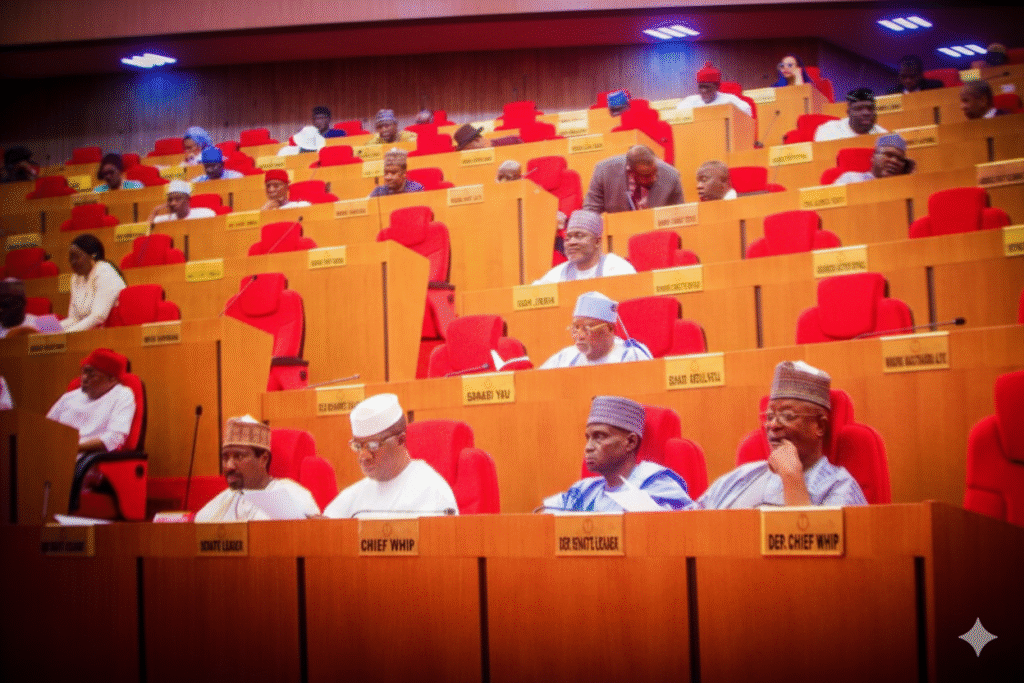
The 10th Senate of the Federal Republic of Nigeria has approved a significant amendment to its Internal Rules, formalizing new requirements for the election of the Senate President and other principal officers.
The decision followed a marathon executive session held on Tuesday, May 5, 2026. Lawmakers agreed to revise the Senate Standing Orders to reinforce parliamentary experience and institutional continuity.
At the center of the reform is an amendment to Order 4 of the Senate Rules. The revised provision mandates that nominations for presiding officers must strictly follow a hierarchy based on seniority and legislative experience.
New Leadership Hierarchy
Under the amended rules, preference for leadership positions will now follow this order:
- Former Presidents of the Senate
- Former Deputy Presidents of the Senate
- Former Principal Officers of the Senate
- Senators who have completed at least one full four-year term
- Senators transitioning from the House of Representatives
- First-time Senators (only if no candidates emerge from higher categories)
This structure reinforces the long-standing “ranking” tradition within the legislature.
Eligibility Restriction for Senate President
A key provision of the amendment is that only returning members of the 10th Assembly who win re-election will be eligible to contest for the office of Senate President and other top leadership roles in the 11th Senate.
Additionally, the rule requires that at least one of the previous terms served must be the immediate term preceding the nomination.
Rationale Behind the Amendment
Senate leadership stated that the reform aims to align Nigeria’s legislative practices with global parliamentary standards. The emphasis on ranking is intended to ensure that presiding officers possess:
- Strong institutional memory
- Legislative experience
- Procedural expertise
According to lawmakers, this will improve governance, stability, and efficiency within the Senate.
The full text of the amended Order 4 will be made available in the Digital Archive section of the National Assembly Library website.