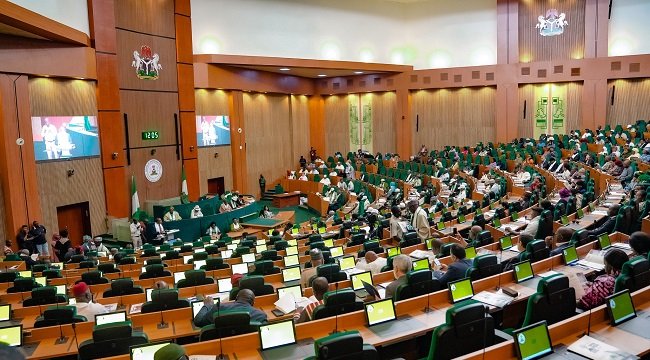
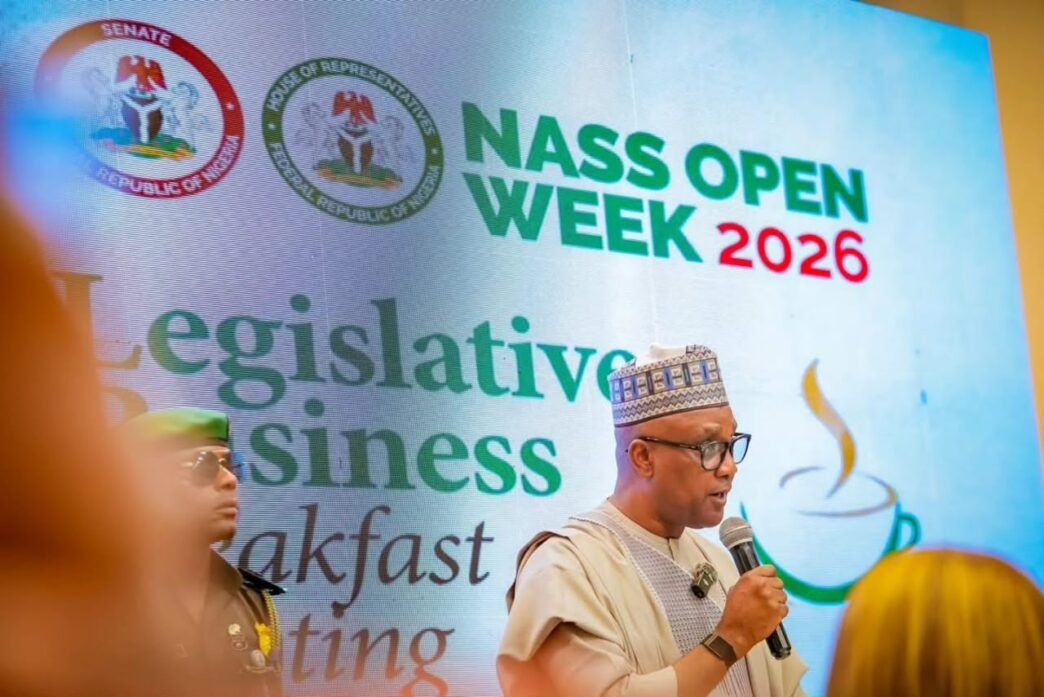
The House of Representatives has announced plans to permanently domicile the National Assembly and Business Executive Roundtable (NABER) at the National Assembly Library, marking a significant step toward institutionalising structured engagement between Parliament and Nigeria’s business community. The announcement was made by the Speaker of the House of Representatives, Rt. Hon. Abbas Tajudeen, PhD, GCON, during the Legislative Business Breakfast Meeting, a special session of the 2026 National Assembly Open Week held at the National Assembly Library in Abuja.
The high level gathering brought together captains of industry, business executives, diplomats, lawmakers, development partners, economic experts, and representatives of the organised private sector to deliberate on the theme, “The Business of Growth: Legislative Priorities for Investment, Competitiveness and Economic Transformation.” The session served as a strategic platform for frank discussions on Nigeria’s economic future, legislative reforms, investment opportunities, and practical measures to improve the country’s business environment.
Responding to concerns raised by private sector leaders, Speaker Abbas reaffirmed the commitment of the House to creating an enabling legislative environment that promotes enterprise, attracts investment, and supports sustainable economic growth. He acknowledged challenges confronting businesses, including the high cost of credit, exchange rate volatility, unstable electricity supply, multiple taxation, port inefficiencies, insecurity, and policy uncertainty, assuring stakeholders that the legislature had listened carefully and was prepared to act.
The Speaker highlighted major legislative interventions already undertaken by the 10th House, including the passage of landmark tax reform laws, the Electricity Act, the Investments and Securities Act, the establishment of regional development commissions, expansion of student loans and consumer credit, and other reforms aimed at strengthening Nigeria’s economic competitiveness. He also outlined five key legislative commitments focused on regulatory certainty, reducing the cost of doing business, expanding access to finance, enhancing competitiveness, and strengthening legislative oversight to ensure effective implementation of economic reforms.
In what emerged as one of the defining announcements of the event, Speaker Abbas announced the establishment of a standing National Assembly and Business Executive Roundtable (NABER), to be convened twice annually as a permanent platform for engagement between the leadership of the National Assembly, economic committees, organised private sector, the Nigerian Economic Summit Group, organised labour, and development partners.
He further announced that the Roundtable be permanently domiciled at the National Assembly Library to ensure continuity, institutional memory, and evidence based policy dialogue beyond annual events.
According to the Speaker, the proposed platform will periodically assess Nigeria’s business environment, monitor the implementation of economic reforms, shape a shared pro growth legislative agenda, and identify legislative solutions to emerging investment challenges, thereby fostering a sustained partnership between lawmakers and the productive sector.
Earlier in his remarks, the Executive Secretary of the National Assembly Library Trust Fund (NALTF), Rt. Hon. Henry Nwawuba, underscored the strategic importance of the National Assembly Library as the intellectual backbone of legislative decision making.
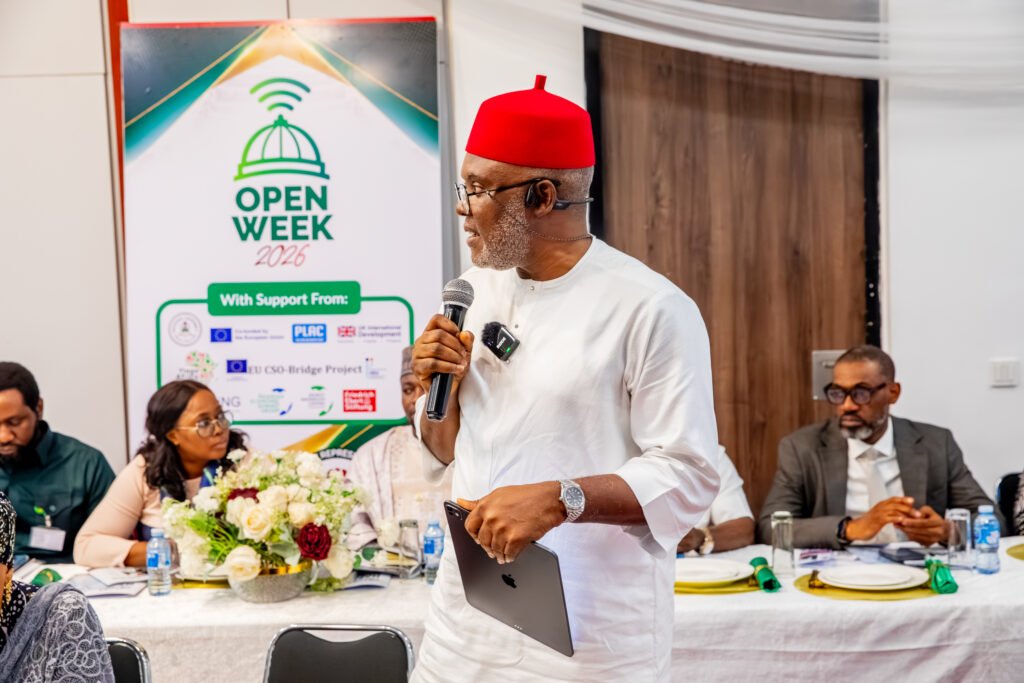
Welcoming participants to the Library, Nwawuba described the institution as a centre of legislative knowledge and research, stressing that sustainable economic growth begins with informed lawmaking. He noted that no economy can outperform the quality of its laws, while quality legislation itself depends on sound research, credible data, and strong institutional memory.
He explained that the National Assembly Library’s core mandate is to equip lawmakers with world class research, legislative digests, policy papers, and comparative legal studies capable of translating national economic aspirations into practical, stable, and investment friendly legislation. According to him, strengthening legislative support systems remains fundamental to building a competitive economy and restoring investor confidence.
Nwawuba identified three priority areas requiring legislative attention to accelerate Nigeria’s economic transformation: ensuring regulatory predictability to de risk investments, enhancing national competitiveness through digital innovation and ease of doing business reforms, and driving structural economic transformation through bold legislation in strategic sectors including energy, agribusiness, and infrastructure financing.
He further emphasised that sustainable economic transformation requires strong collaboration among the Legislature, Executive, private sector, academia, civil society, and development institutions. Describing the Legislative Business Breakfast as a strategic bridge between policymakers and industry leaders, he affirmed the readiness of the National Assembly Library Trust Fund to convert the outcomes of the deliberations into practical legislative blueprints that will support national development.
The Legislative Business Breakfast formed one of the flagship engagements of the 2026 National Assembly Open Week, reinforcing the National Assembly’s commitment to strengthening collaboration with the private sector while positioning the National Assembly Library as a permanent hub for research driven legislative engagement, policy dialogue, and evidence based economic governance.