President Bola Tinubu has announced that state governments have resolved to leverage Compressed Natural Gas (CNG) and electric vehicles to lower transportation costs, with October 1, 2026, set as the target date for Nigerians to begin benefiting from reduced fares.
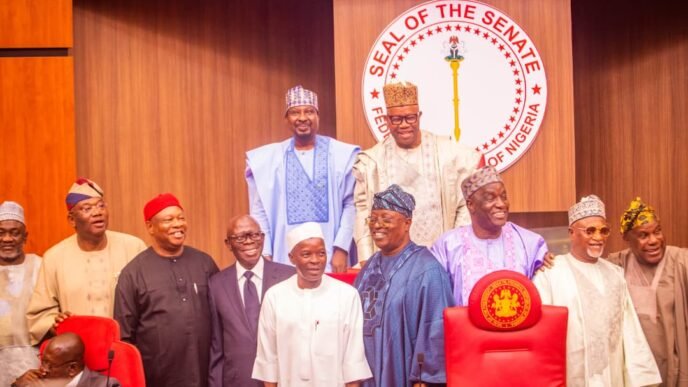
Disclosing this following a strategic meeting at the State House in Abuja, the President stated that state executives have independently initiated measures to drive down intra-state transit expenses. He emphasized that the initiative is designed to translate the gains of the Federal Government’s energy transition programme into direct relief for commuters burdened by high travel costs.
To fast-track the process, a joint Federal and State committee is being established for immediate implementation.
“We have agreed to set up a joint Federal and State committee to begin implementing these measures immediately,” Tinubu said.
The core objective of the joint effort is ensuring that reduced operating expenditures for commercial operators translate directly into cheaper fares for the general public. Highlighting the economic advantages of alternative fuel, the President pointed out that gas-powered automobiles drastically cut down overhead expenses.
“A vehicle running on CNG spends 60 to 80 per cent less on fuel than one running on petrol,” Tinubu noted. “From October 1, our goal is that Nigerians begin to partake in those savings through lower transport fares. We have agreed that cheaper fuel should result in cheaper fares.”
Because intra-state transit accounts for the daily movement of most citizens, the administration views regional cooperation as vital.
“Intra-state transport is where Nigerians feel the cost most directly, and it is where the states hold the levers. I am encouraged that our governors are moving to bring these benefits closer to the people they serve,” he added.
The Federal Government has committed substantial resources to pivot away from petrol-dependent transportation. Under the Presidential CNG Initiative, more than 120,000 vehicles have already been converted nationwide, with over 100,000 additional conversion kits currently being processed.
To sustain this growing fleet, conversion centres and refuelling networks are expanding rapidly. Through the Midstream and Downstream Gas Infrastructure Fund, the government is financing over 100 gas projects nationwide, which include 15 mother stations and 86 daughter stations. Four major facilities were commissioned in Lagos, Abuja, and Owerri—including a 15-station network in Lagos and an Abuja hub capable of servicing 1,000 cars, tricycles, and 50 trucks and buses daily.
Furthermore, President Tinubu has ordered an additional rollout of 500 refuelling stations, building on a previous directive of 500 stations to bring the national target to 1,000 functional stations.
Concluding his remarks, the President stressed that sustained synergy between federal and regional bodies remains critical to achieving nationwide economic relief.