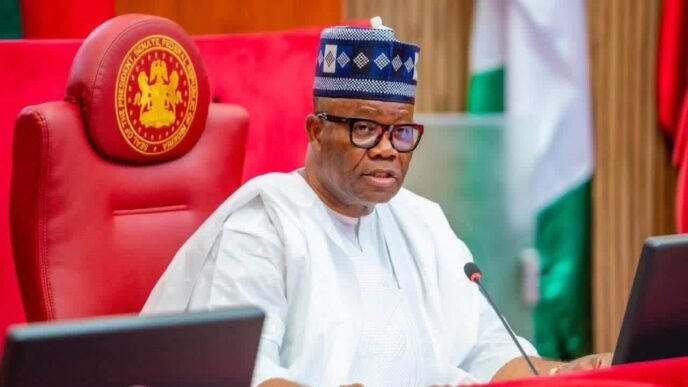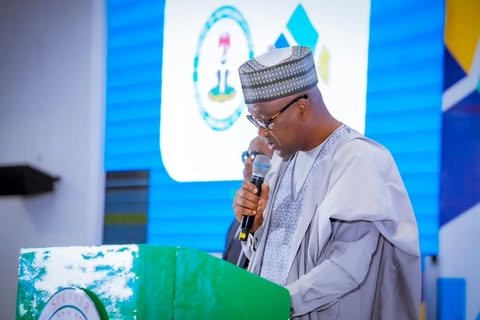
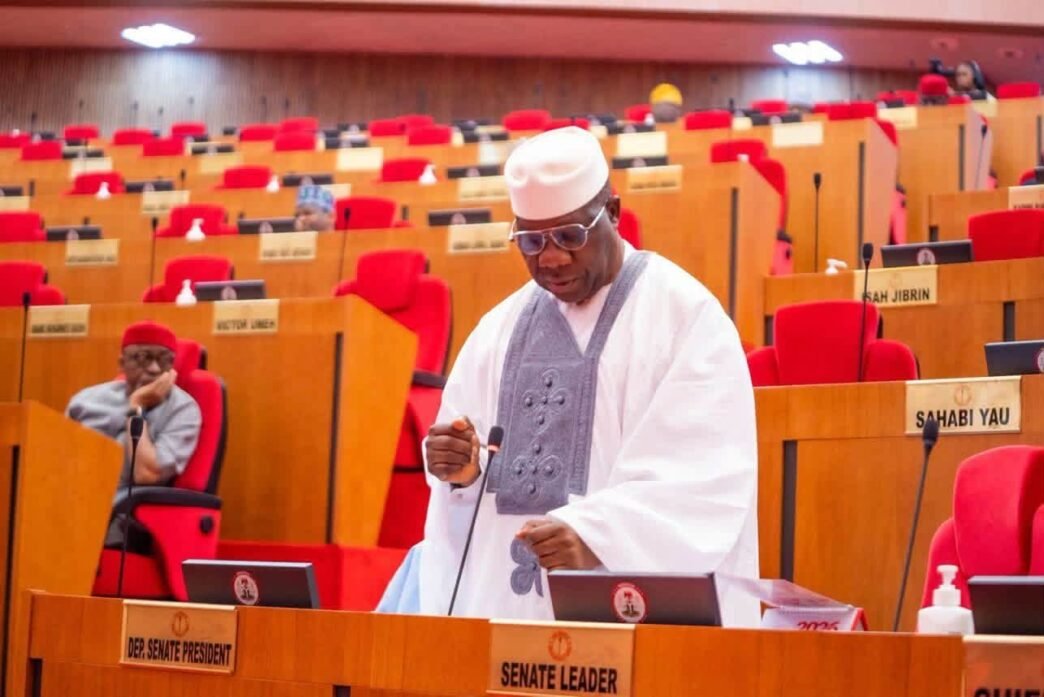
Senate Leader, Opeyemi Bamidele (APC, Ekiti Central) declared on Thursday, October 29, 2026, that the establishment of state controlled policing in Nigeria has crossed the threshold from political debate into tangible reality. Speaking at the National Institute for Policy and Strategic Studies (NIPSS) in Kuru, Plateau State, Senator Bamidele announced that 30 State Houses of Assembly have formally approved the State Police Constitution Alteration Bill, 2026.
Delivering a lecture titled “Improving the Efficiency and Effectiveness of Governance through Proactive Lawmaking” to participants of Senior Executive Course 48, the Senate Leader stated that all legal and constitutional prerequisites under Section 9(2) of the 1999 Constitution (as amended) have been fully met.
Key Highlights of the Announcement
- With endorsements from 30 states, exceeding the required two-thirds majority (24 states), the constitutional requirement to amend the police framework is complete.
- The National Assembly plans to collate state positions, pass a resolution by a simple majority in both chambers, and transmit the final bill for presidential assent on or before December 2026.
- The reform is designed to create localized policing that understands regional terrain and cultural contexts, operating within strict constitutional safeguards and human rights protections.
- Lawmakers emphasized evaluating legislative success through the transformative societal impact of key interventions rather than the sheer volume of bills passed.
Highlighting the vision behind the constitutional shift, Senator Bamidele reaffirmed that decentralized policing aims to complement, rather than weaken, federal authority:
We are pleased to inform our constituents across the federation that State Police have moved from rhetoric to reality. We have already received formal reports from the State Houses of Assembly and as of today, no fewer than 30 states have approved the State Police Constitution Alteration Bill, 2026.
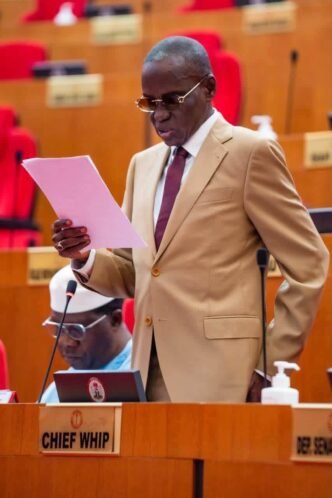
Senator Bamidele Michael Opeyemi.
“This is a historic milestone in our collective quest to re-engineer our security architecture and make it more responsive, more local and more effective… The reform is not aimed at weakening the centre but at strengthening the federation. It is not about creating state armies, but about creating state-led, community-anchored policing within clear constitutional safeguards, operational standards, oversight mechanisms and human rights protections.”
The lecture was attended by notable legislative and policy leaders, including Senator Diket Plang (Chairman, Senate Committee on Employment, Labour and Productivity), Senator Pam Dachungyang (Chairman, Senate Committee on Tourism), Professor Ayo Omotayo (Director-General of NIPSS) and Mr. Adekunle Alonge (former President, Nigerian Institution of Estate Surveyors and Valuers).
Following procedural collation by the Senate and House of Representatives, the resolution will be transmitted to President Bola Ahmed Tinubu for assent to conclude the historic constitutional amendment.