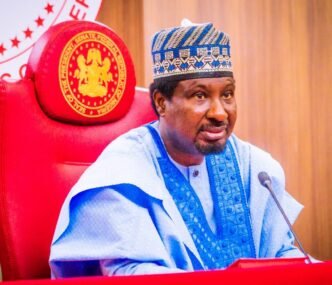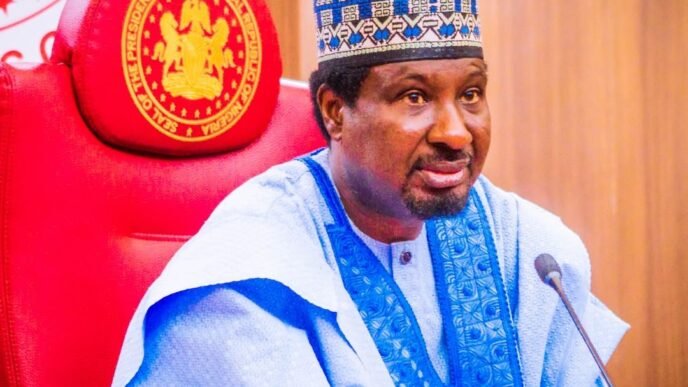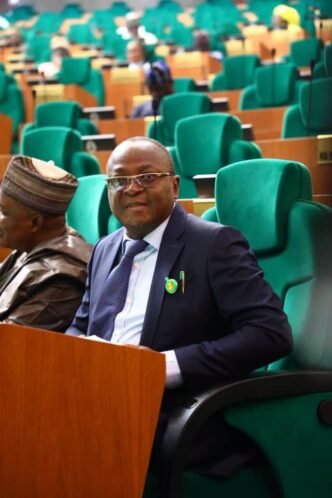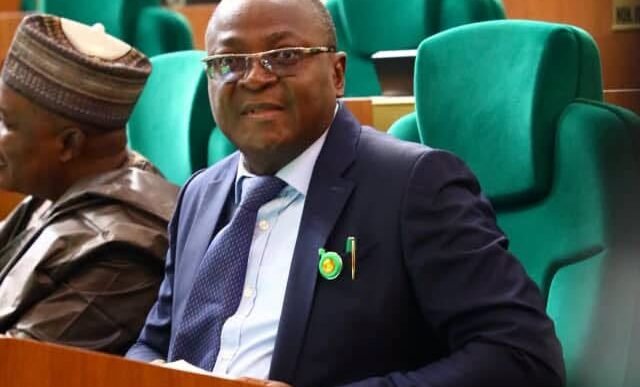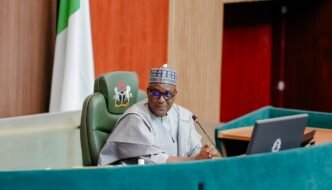

The House of Representatives, at Tuesday’s plenary presided over by the Speaker, Rt. Hon. Abbas Tajudeen, PhD, GCON, adopted a Matter of Urgent Public Importance on flooding in Cross River State and two motions addressing pensioners’ welfare and the reconsideration of the Raw Materials Research and Development Council Act.
The House also received seven Bills for First Reading, passed four Bills at Third Reading and advanced three Bills on governance reform, environmental enforcement and agricultural education through Second Reading.
Members further received three Committee Reports and adopted six Committee Reports on Bills seeking to establish agricultural colleges and other institutions.
Below are highlights of the sitting and key decisions on public welfare, legislative accountability, education and national development.
I. MOTIONS AND MATTERS OF URGENT PUBLIC IMPORTANCE
Motions
Pensioners’ Welfare
The House called for an investigation into alleged breaches of pension agreements by the Central Bank of Nigeria (CBN) and the exclusion of retirees from general pension increases. It also invited the CBN Governor and relevant stakeholders to provide explanations and supporting documents.
Raw Materials Research and Development Council Act
The House rescinded its earlier passage of the Act and recommitted five clauses for further legislative consideration. This followed the President’s observations on the Bill, informed by a critical examination by the Federal Ministry of Justice.
A Technical Committee comprising representatives of both Chambers of the National Assembly and legal drafting experts from the Directorate of Legal Services was constituted to examine and address the identified issues.
Matter of Urgent Public Importance
Cross River Flooding
The House called for relief interventions and agricultural recovery support for households affected by flooding in Abi Local Government Area of Cross River State.
II. BILLS AND LEGISLATIVE PROGRESSION
First Reading
The House received seven new Bills, including a proposal to prohibit lynching and extrajudicial executions.
Second Reading
Three Bills on governance reform, environmental enforcement and agricultural education advanced through Second Reading.
They include proposals to establish the National School of Government; strengthen the statutory enforcement powers and penalties available to the National Oil Spill Detection and Response Agency (NOSDRA); and establish the Federal College of Agriculture, Shani, Borno State.
Third Reading
The House passed four Bills addressing financial crime enforcement, anti-graft capacity, workers’ compensation and healthcare access.
The Bills provide for amendments to the EFCC Establishment Act; establishment of the EFCC Institute for training, research and policy development; establishment of the Nigeria Employees’ Compensation Trust Fund Agency; and establishment of a Federal Medical Centre in Obi, Benue State.
III. PRESENTATION AND CONSIDERATION OF REPORTS
Presentation of Reports
The House received three Committee Reports: two from the Committee on Agricultural Colleges and Institutions on proposed agricultural institutions in Kano and Rivers States, and one from the Committee on Financial Crimes on a Bill to establish a framework for strengthening national systems resilience and implementing Nigeria’s international obligations on anti-money laundering, countering the financing of terrorism and proliferation financing.
Consideration of Reports
The House adopted six Committee Reports on Bills seeking to establish agricultural colleges and institutions in Ishiagu, Ebonyi State; Akure, Ondo State; Ogbia, Bayelsa State; and Igbeti and Igboora, Oyo State.