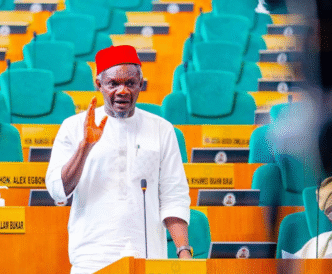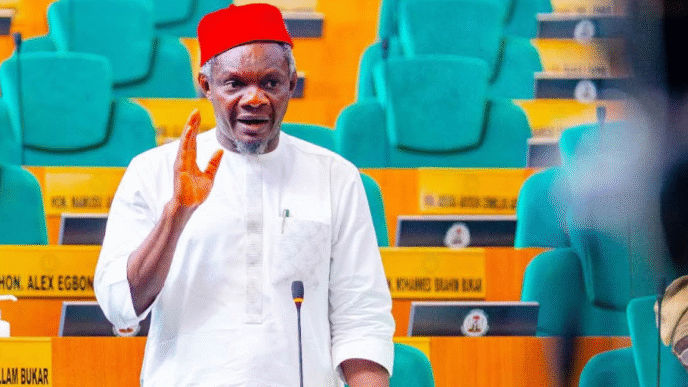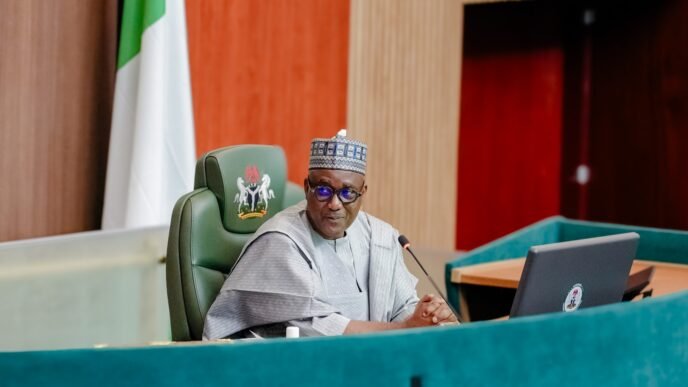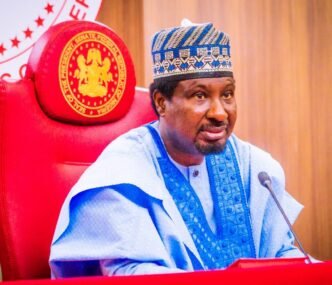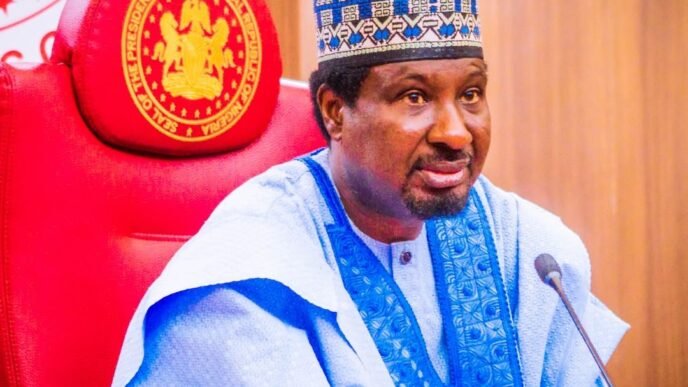
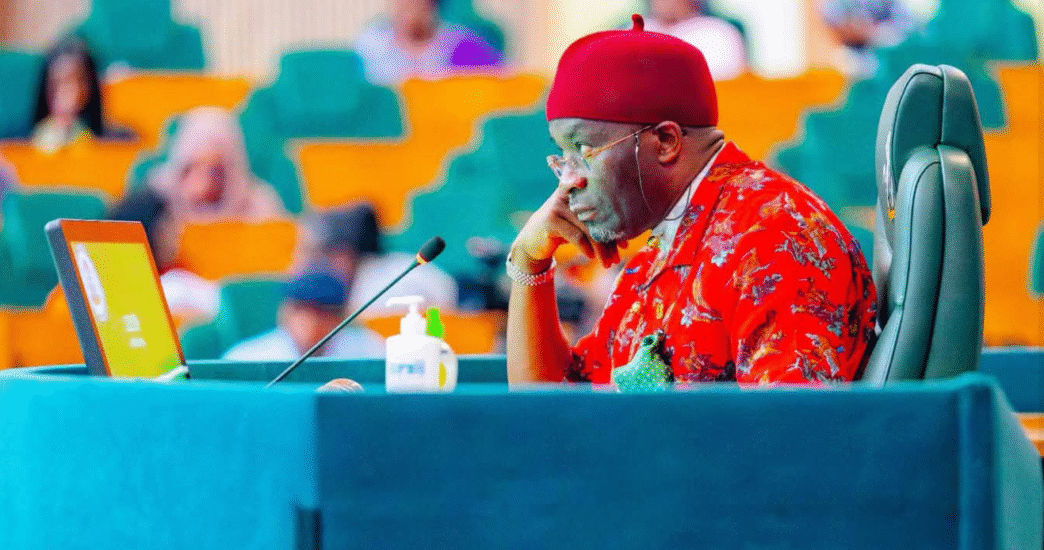
The House of Representatives, at Wednesday’s plenary presided over by the Deputy Speaker, Rt. Hon. Benjamin Okezie Kalu, PhD, CFR, considered key legislative, constitutional and oversight matters spanning emergency healthcare, economic development, public infrastructure and institutional reform.
Members adopted five motions addressing sickle cell disease, kidney disease intervention, support for Micro, Small and Medium Enterprises (MSMEs), and critical road infrastructure. The House also received a new Bill for First Reading, advanced five Bills through Second Reading and passed another at Third Reading.
In furtherance of its oversight and representative responsibilities, the House received four Committee Reports for presentation, adopted five reports following consideration, and received eight public petitions on alleged corruption, land acquisition, electricity disconnection and consumer rights concerns.
Below are the highlights of the sitting and key decisions taken on the floor of the Green Chamber.
I. CONSTITUTIONAL AND LEGISLATIVE MATTERS
Establishment of State Police
The Deputy Speaker informed the House that 29 State Houses of Assembly had approved the Constitution of the Federal Republic of Nigeria, 1999 (Sixth Alteration) Bill, providing for the establishment of State Police Services and related matters.
In a correspondence issued by the Clerk to the National Assembly, Members were informed that the approvals exceeded the constitutionally prescribed threshold of not less than two-thirds of the 36 State Houses of Assembly, equivalent to 24 States, as required under Section 9 of the Constitution.
The necessary administrative processes are being undertaken to facilitate the transmission of the Bill to the President of the Federal Republic of Nigeria for assent.
Sickle Cell Disease Bill
The House recommitted the Sickle Cell Disease (Prevention, Control and Management) Bill, 2026 (HB. 2774), to the Committee of the Whole for consideration following its re-gazetting. The Bill had been passed by the preceding Assembly, but no communication on presidential assent or withholding of assent was received before the expiration of that Assembly’s tenure.
MOTIONS
Kidney Disease Intervention in Borno State
The House urged the Federal Ministry of Health and Social Welfare to establish a special kidney disease intervention programme in collaboration with the Borno State Government to strengthen prevention, early diagnosis, treatment and patient care.
It also called for an assessment of the need for additional nephrology services, dialysis centres and specialised kidney care facilities in underserved areas. Relevant House Committees were mandated to monitor implementation and report within four weeks.
MSME Support and Federal Government Interventions
The House mandated the Committee on Small and Medium Enterprises to review Federal Government funding and intervention programmes for MSMEs from 2023 to date, assess their implementation and measurable impact, and identify gaps affecting access to finance, skills development, technology and markets.
The Committee is to submit a comprehensive report with recommendations within four weeks.
Abakaliki–Ikwo–Oferekpe–Obubra Road
The House urged the Federal Ministries of Works, Finance, and Budget and Economic Planning to prioritise the settlement of verified outstanding Interim Payment Certificates (IPCs) to facilitate the contractor’s remobilisation and continuation of the road project.
The Committees on Works, Appropriations and Finance were mandated to review the project’s funding status and ensure the judicious disbursement and utilisation of released funds.
Benin–Okene Highway
The House urged the Federal Government to declare a state of emergency on the Agbede and Okpella sections of the Benin–Okene Highway in Edo State to facilitate urgent intervention.
It further called on the Federal Ministry of Works to provide safe and accessible alternative routes for affected communities pending comprehensive rehabilitation of the highway.
II. BILLS AND LEGISLATIVE PROGRESSION
First Reading
The House received a Bill to amend the Federal Universities of Technology Act, 2004.
Second Reading
Five Bills addressing emergency healthcare, FCT rent regulation, pension administration, technological education and agricultural education scaled Second Reading and were referred to the relevant Committees for further legislative scrutiny.
The Bills seek to:
- Establish the Federal University of Technology, Odukpani, Cross River State.
- Amend the National Health Act, 2014, to strengthen emergency medical treatment through mandatory triage, stabilisation and referral protocols.
- Establish a governing board for the administration of State Security Service pensions.
- Regulate rent payments in the FCT, prohibit compulsory multiple-year rent demands, and regulate housing agency practices and rent increases.
- Establish the Federal College of Forestry and Resources Management, Marte, Borno State.
Third Reading
The House passed a Bill to amend the Federal Medical Centres Act, 2022, to establish the Federal Medical Centre, Iyamho, Edo State.
The legislation seeks to expand access to specialised healthcare services and strengthen the delivery of tertiary medical care in the state and surrounding communities.
III. PRESENTATION AND CONSIDERATION OF REPORTS
Presentation of Reports
The House received four Committee Reports covering proposed legislation to establish the National Institute for Public Health and Infectious Diseases, Zaria; the Federal College of Nursing Sciences, Nkpa Bende, Abia State; and the Federal Medical Centre, Bende, Abia State.
The reports also included proposed amendments to the University Teaching Hospitals (Reconstitution of Boards, etc.) Act to reduce the membership of governing boards.
Consideration of Reports
The House considered and adopted five Committee Reports on Bills relating to the establishment of the Federal College of Agriculture, Shani, Borno State; the Federal University of Technology, Odukpani, Cross River State; the Federal College of Nursing Sciences, Nkpa Bende, Abia State; the Federal Medical Centre, Bende, Abia State; and the National Safety Regulatory Board.
IV. PUBLIC PETITIONS
The House received eight public petitions seeking legislative intervention on various matters, including requests for independent investigations into alleged corruption; alleged unlawful land acquisition.
Other petitions bother on electricity disconnection affecting communities; the delisting of School from CBT and JAMB; consumer protection concerns; and alleged misconduct by the Nigeria Police.