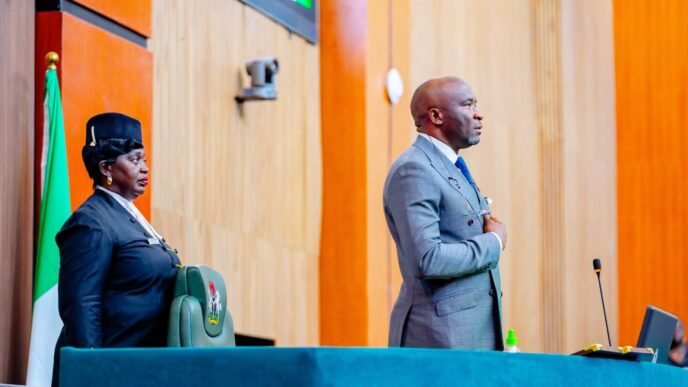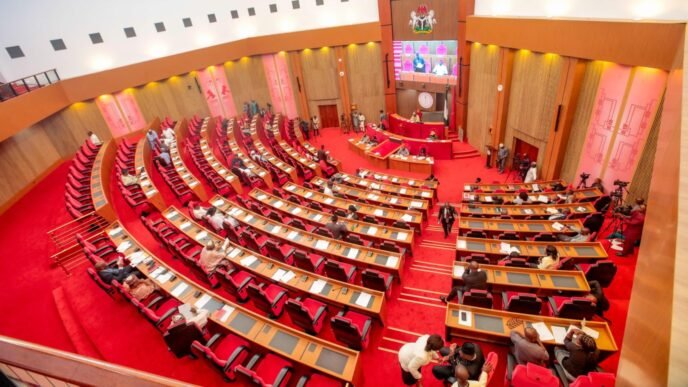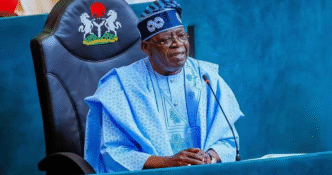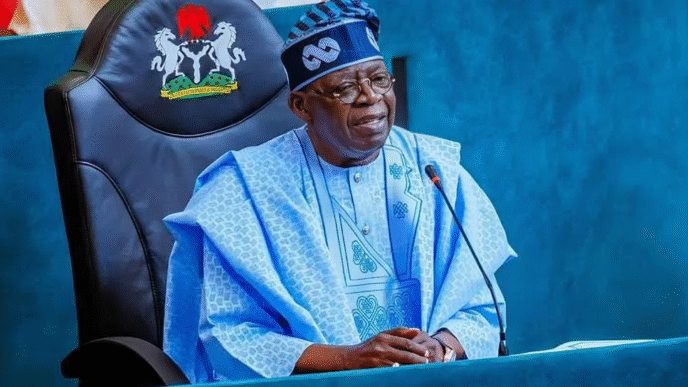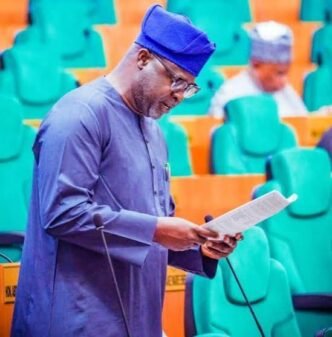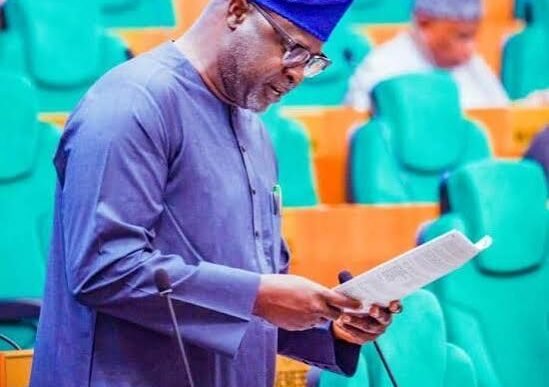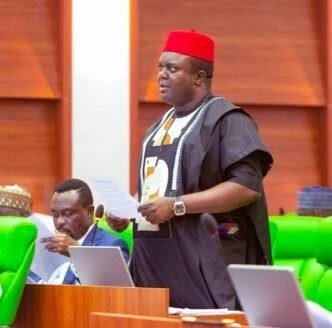
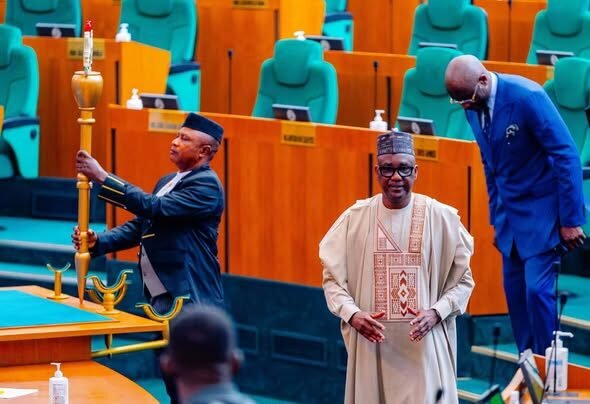
The House of Representatives, during its plenary sitting on Wednesday, November 18, 2026, presided over by the Speaker, Rt. Hon. Abbas Tajudeen, PhD, GCON, took decisive legislative action on pressing national security, public health, educational, and infrastructure matters.
On the Executive Communication, the House received the National Mental Health (Amendment) Bill, 2026, transmitted by President Bola Ahmed Tinubu, GCFR, pursuant to Section 58(2) of the 1999 Constitution of the Federal Republic of Nigeria (as amended). The Bill seeks to amend the National Mental Health Act, No. 46, 2021, to decriminalise attempted suicide and provide support for persons who attempt suicide in Nigeria.
Key highlights from the sitting included the receipt of four citizens’ petitions, resolutions on urgent matters of public importance, including suspected herbal poisoning in Benue State, private-sector railway development, and farmers-herders clashes in Gombe State, the transmission of the National Mental Health (Amendment) Bill, 2026 from President Bola Ahmed Tinubu, GCFR, the progression of multiple Bills across First, Second, and Third Readings, and the adoption of eight Committee Reports.
The House received four citizens’ petitions bordering on alleged criminal conspiracy, unlawful detention, pension-related matters, and other public grievances. All four petitions were formally referred to the House Committee on Public Petitions for further legislative investigation and action.
The House expressed deep concern over the reported deaths of four persons and illness of 11 others following the consumption of a suspected poisonous herbal product allegedly distributed by three individuals in Oju/Obi Federal Constituency, Benue State, with several victims receiving medical care in Makurdi. Lawmakers urged the Federal Ministry of Health and Social Welfare, the National Agency for Food and Drug Administration and Control (NAFDAC), the Nigeria Centre for Disease Control and Prevention (NCDC), and relevant Benue State health authorities to coordinate an immediate response to identify, assess, treat, and monitor all potentially affected persons, while calling for a thorough police investigation into the incident.
Highlighting the potential of an efficient rail network to lower transportation costs, connect seaports to production centres, and ease pressure on federal highways, the House called for a clearer framework to attract private-sector investment and partnerships. It urged the Federal Ministry of Transportation, in collaboration with the Nigerian Railway Corporation (NRC), the Infrastructure Concession Regulatory Commission (ICRC), and State Governments, to identify priority passenger and freight corridors and submit an implementation plan within 60 days.
Condemning recurring attacks on farmers in Gombe/Kwami/Funakaye and Yamaltu Deba Federal Constituencies between November 13 and 17, 2026, which left five persons seriously injured, around 150 cattle rustled, motorcycles stolen, and farmlands destroyed, the House mandated relevant Committees to liaise with the Office of the National Security Adviser for urgent security interventions and engage relevant Ministries, Departments and Agencies (MDAs) to deliver relief materials to victims.
Adopting a motion on the education sector, the House resolved to investigate the Federal Ministry of Education’s directive cancelling 2026 admissions into the National Teachers’ Institute (NTI), Kaduna, and terminating its university affiliations and degree-awarding arrangements while the NTI Act (Amendment) Bill (HB. 879) remains under legislative consideration. Lawmakers also raised concerns over the treatment of student-fee receipts as operating surplus, which reportedly hampers the Institute’s ability to pay facilitators, provide learning materials, and conduct examinations, and urged the Ministry to suspend further action pending the conclusion of the legislative process on HB. 879.
Thirteen new Bills were introduced and passed First Reading during the plenary, including a legislative proposal to amend the Counterfeit and Fake Drugs and Unwholesome Processed Foods Act, alongside several other bills spanning multiple sectors.
The House formally received two Reports laid before it by the Committee on Agricultural Colleges and Institutions.
The House passed four Bills at Third Reading, addressing critical areas of mining security, financial oversight, specialised healthcare, and secondary education.
Five Bills aimed at strengthening specialised healthcare, economic education, grassroots governance, and media training scaled Second Reading and were referred to the relevant House Committees for further legislative scrutiny:
-A Bill to establish the Federal University of Applied Sciences Teaching Hospital, Kachia, Kaduna State.
-A Bill to establish the Federal University of Health Sciences Teaching Hospital, Otukpo, Benue State.
-A Bill to establish the Council of Economic Education and provide for the appointment of the Director-General of the Nigerian School of Economics.
-A Bill to amend the Constitution of the Federal Republic of Nigeria, 1999 (Sixth Alteration) to create an additional Local Government Area in Kogi State.
-A Bill to establish the National Institute of Journalism and Media Studies.
In line with House Standing Orders, the House recommitted the Federal College of Education (Technical), Ajegunle, Ogun State Establishment Bill (HB. 2886) to the Committee of the Whole for reconsideration, as the preceding Assembly had transmitted the Bill for presidential assent without receiving communication before the expiration of its tenure.
Lawmakers considered and adopted the recommendations of eight Committee Reports covering legislative proposals on local manufacturing, agricultural institutions, fisheries, land resources technology, and specialised healthcare.