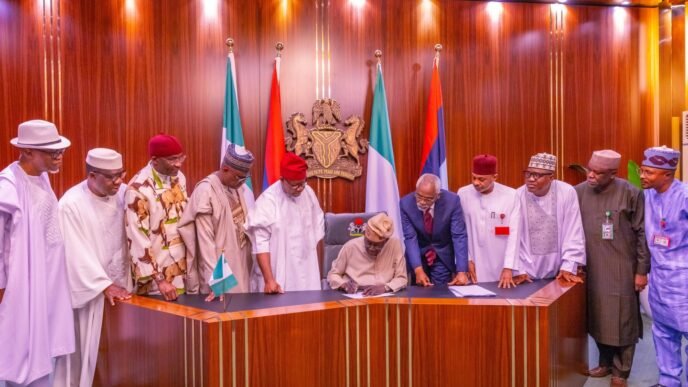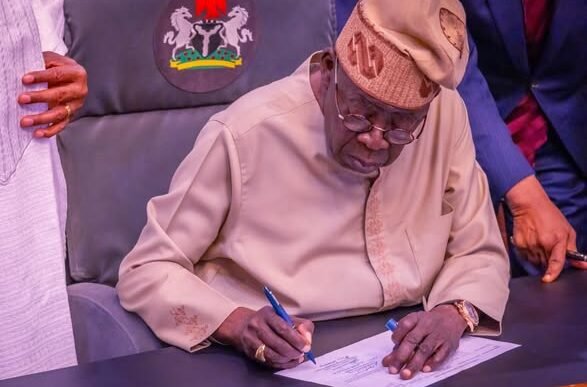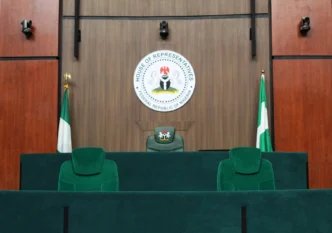

Wednesday, February 18, 2026 – The House of Representatives on Tuesday passed A Bill for an Act to Repeal the Electoral Act No. 13, 2022 and Enact the Electoral Act, 2026 to Regulate the Conduct of Federal, State, and Area Council Elections in the Federal Capital Territory, Abuja, and for Related Matters (HB. 2479).
The passage of the Bill at an emergency session underscores the constitutional responsibility of the House to ensure that Nigeria’s electoral architecture remains coherent, predictable, and legally certain, not only as the nation approaches the 2027 General Elections, but as a durable framework for future electoral cycles.
The House had passed an earlier version of the Bill in December 2025, while the Senate passed its own version earlier this month. Differences between the two versions necessitated the constitution of a Joint Senate and House Conference Committee to harmonise the positions of both Chambers in accordance with established parliamentary procedure.
Following the announcement of the electoral timetable by the Independent National Electoral Commission (INEC), concerns were raised regarding the overlap of certain key dates with the Ramadan and Lenten observances next year. As a listening and responsive House, stakeholder feedback and broader national implications were carefully considered within the confines of constitutional responsibility.
In line with parliamentary practice, a Conference Committee is strictly limited to reconciling differences arising from versions already passed by both Chambers and cannot introduce new substantive provisions. The Committee discharged this mandate and resolved all prior inconsistencies.
However, as the emergent concerns fell outside the scope of the harmonised versions, the House convened an emergency session to introduce necessary amendments while fully incorporating the recommendations of the Joint Conference Committee. These amendments, among other things, provide INEC with a clearer statutory framework and sufficient latitude to contemplate lawful adjustments to the electoral timetable while safeguarding the integrity, stability, and certainty of the electoral calendar.
Pursuant to Order Nine, Rule 1(6) of the Standing Orders of the House, the House formally rescinded its earlier decision on the 2025 version of the Bill to enable the lawful integration of the Conference Committee’s technical recommendations alongside the additional amendments deemed necessary. The bi-partisan Conference Committee was supported by principal officers, legal experts, civil society representatives, and drafting specialists, ensuring that the harmonisation process was comprehensive, inclusive, and technically sound.
The Electoral Bill, 2026 builds upon the foundation of the Electoral Act, 2022 and introduces targeted reforms to address interpretative ambiguities exposed by recent electoral litigation while strengthening institutional safeguards designed to protect the sanctity of the ballot across successive electoral cycles.
Key Highlights of the Bill
- Election Funding Certainty
Election funds must be released to INEC at least one year before a general election, strengthening operational preparedness, improving procurement planning, and reducing opportunities for undue executive influence.
- Revised Election Notice Timeline
The statutory Notice of Election is now issued 300 days before polling day, providing INEC with ample time for strategic planning and logistical preparations, while minimizing the risk of prolonged pre-election tensions and ensuring a well-organized and efficient electoral process.
- Streamlined Candidate Nomination Process
The deadline for submission of candidate lists is shortened from 180 to 120 days before election day. This compresses the intra-party disputes timeline and allows earlier resolution of pre-election litigation, ensuring focus on substantive electoral issues.
- Statutory Codification of BVAS
The Bimodal Voter Accreditation System (BVAS) is now expressly entrenched in law, eliminating administrative discretion and strengthening electronic accreditation safeguards against overvoting or manipulation.
- Mandated Electronic Transmission
Electronic transmission of Form EC8A election results to the IReV is now mandatory, ensuring that valid votes are fully and accurately reflected. The Bill provides safeguards to address any rare instances where transmission may be impossible, preserving the integrity and credibility of the electoral outcome.
- Strengthened Criminal Sanctions for Collation Infractions
Intentional false declarations or deliberate violations of collation procedures now attract a mandatory minimum of ten years’ imprisonment without the option of a fine, enhancing deterrence and accountability.
- Statutory Backing for IReV
The Election Results Viewing Portal (IReV) receives explicit statutory recognition, reinforcing transparency and enabling independent verification of polling unit outcomes.
- Reinforced Overvoting Controls
Enhanced cross-verification mechanisms are introduced at the collation stage to automatically identify and cancel results exceeding accredited voter counts, reducing aggregation center manipulation risk. - Clarified Seven-Day Review Authority
Procedural triggers for INEC’s seven-day review of declarations made under duress are now precisely defined, providing a narrow administrative correction window before formal litigation.
- Digital Verification of Party Membership Registers
Political parties are required to maintain verifiable digital membership records, reinforcing internal democracy and reducing risks of factional manipulation within party structures.
Following the rescission, reconsideration, and passage of the Bill, the work of the Joint Senate and House Conference Committee stands duly concluded, with its recommendations fully reflected in the version adopted by the House.
While no legislation can perfectly satisfy every individual, partisan, or sectional preference, this Bill reflects the considered judgement of the majority of the House exercised in strict fidelity to constitutional mandate and parliamentary procedure. Divergent views, including heated exchanges and other expressions of dissent during plenary, are recognised as legitimate features of representative democracy. We reiterate that, despite these differences, the shared aspiration of all Nigerians remains the conduct of free, fair, and credible elections anchored on a stable and predictable legal framework.
The 10th Assembly remains resolute in strengthening democratic institutions, protecting the integrity of the ballot, and reinforcing public confidence in Nigeria’s electoral system.