
The House of Representatives has mandated a legislative investigation into allegations of fiscal incentive abuse, revenue leakage, and unfair market competition involving three Chinese-owned sanitary products manufacturing companies operating within the Ogun Guangdong Free Trade Zone, Ogun State.
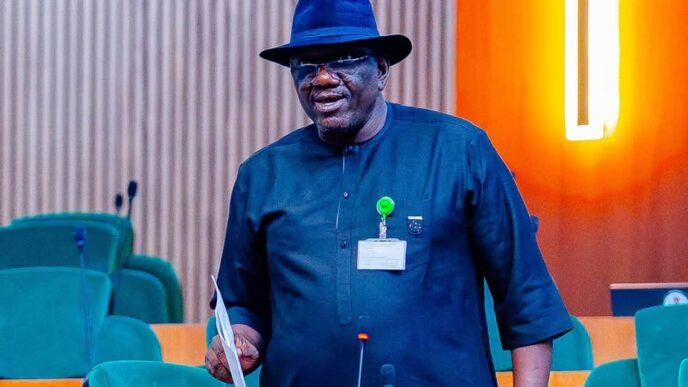
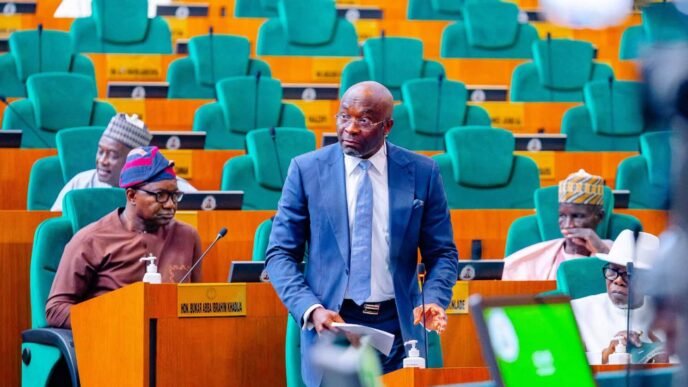
The resolution followed a motion moved at plenary on Wednesday, November 25, 2026, by Hon. Rabiu Yusuf, titled “Need to Investigate the Alleged Abuse of Free Trade Zone Privileges, Loss of Revenue and Unfair Competition from the Operations of Three Chinese-owned Sanitary Products Manufacturing Companies, Ogun Guangdong Free Trade Zone, Ogun State”.
Leading the debate, Hon. Yusuf noted that the Free Trade Zone scheme under the Nigeria Export Processing Zones Act, supervised by the Nigeria Export Processing Zones Authority (NEPZA), was established to promote export-oriented industrialisation, attract foreign direct investment, encourage technology transfer, generate employment, and boost foreign exchange earnings, rather than serve as a conduit to circumvent Nigeria’s customs and revenue laws.
He drew the attention of the House to formal concerns raised by Hayat Kimya Nigeria Limited, an enterprise operating within the Ogun Guangdong Free Trade Zone, alleging that three Chinese-owned sanitary products manufacturers within the same Zone channel virtually 100 percent of their manufactured goods into the Nigerian Customs Territory for domestic consumption instead of export-oriented production.
Hon. Yusuf cited critical statutory provisions governing Free Trade Zone operations and domestic market sales:
Section 17 of the Nigeria Export Processing Zones Act, which stipulates that goods exported from a Free Trade Zone into the Nigerian Customs Territory are subject to the same customs and licensing requirements applicable to goods imported from foreign countries.
Sections 134 and 137 of the Nigeria Customs Service Act, 2023, which mandate customs supervision of Free Trade Zones and require goods admitted into the Customs Territory to undergo full customs procedures, including the payment of applicable duties and fees.
The Nigeria Export Processing Zones Investment Procedures, Regulations and Operational Guidelines, which require products manufactured, assembled, or pre-packaged within Free Trade Zones and sold into the Customs Territory to be registered and subjected to prescribed tariffs and charges.
The Second Schedule of the Nigeria Tax Act, 2025, which sets a 25 percent threshold for sales into the Nigerian Customs Territory to qualify for full profit-tax exemption, subjecting profits attributable to sales exceeding that threshold to taxation.
Expressing concern that non-compliance by the affected companies could result in massive revenue losses to the Federal Government, confer an undue competitive advantage over compliant manufacturers both inside and outside the Free Trade Zone system, weaken local manufacturing, and discourage legitimate investors, the House resolved to:
– Urge the Federal Government to:
Strengthen monitoring, inventory management, production verification, and customs surveillance mechanisms across all Free Trade Zones in Nigeria to prevent the abuse of statutory incentives and enforce compliance with the law.
Ensure that all enterprises operating within Free Trade Zones enjoy equal statutory privileges and face uniform regulatory compliance requirements without discrimination, while protecting companies operating outside the Zones from unfair competition.
-Mandate the House Committees on Commerce and Customs and Excise to:
Investigate the allegations and determine the extent of compliance by the three companies with all statutory, regulatory, and operational requirements governing Free Trade Zone enterprises in Nigeria.
Examine the implications of the alleged practices on Nigeria’s international trade and investment commitments, particularly regarding fair competition, transparency, non-discrimination, and the protection of legitimate investments.
Assess whether existing regulatory frameworks adequately safeguard Nigeria’s national economic interests, direct relevant regulatory authorities to enforce appropriate measures, including the recovery of outstanding statutory revenue, penalties, and lawful sanctions without prejudice to the rights of the companies concerned, and report back to the House within four weeks for further legislative action.