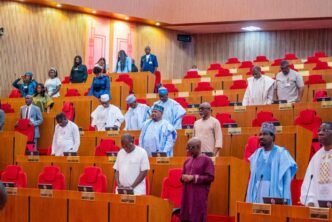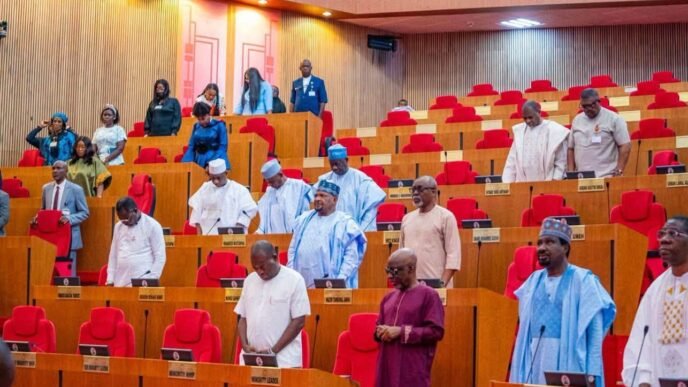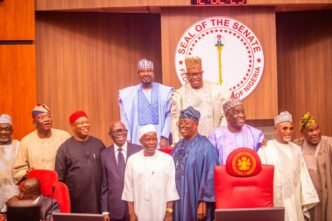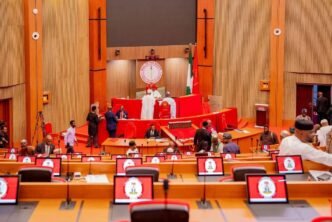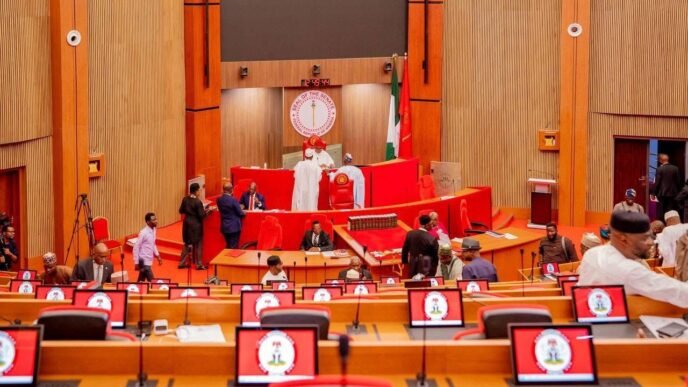

Following the tragic abductions of 87 students and teachers across Borno and Oyo States, the Senate has declared its definitive resolve to fast-track the establishment of state police formations nationwide.
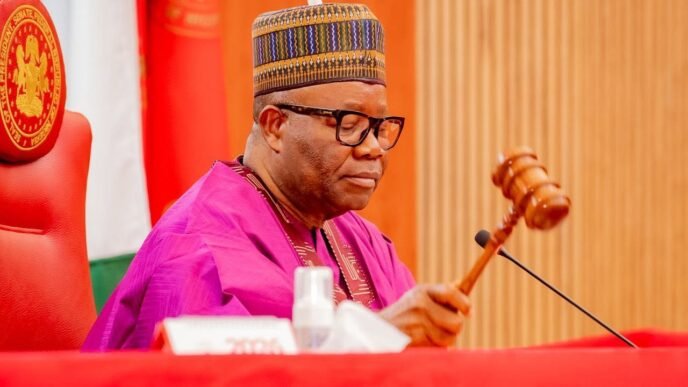
The Leader of the Senate and Vice Chairman of the Senate Committee on the Review of the 1999 Constitution, Senator Opeyemi Bamidele, condemned the school invasions in the strongest terms, characterizing them as a direct assault on Nigeria’s future. He emphasized that the growing insecurity around educational institutions underscores the critical need to immediately restructure the nation’s security architecture through comprehensive constitutional amendments.
Legislative Acceleration and Structural Reform
The 10th National Assembly is currently in the advanced stages of amending the 1999 Constitution to decentralize policing. Upon resuming plenary sessions on June 2, the federal legislature intends to finalize all outstanding legislative initiatives to address the country’s security vulnerabilities.
Once passed by the National Assembly, the proposal will be transmitted to the state Houses of Assembly, where it requires ratification by at least two-thirds of the states. Senator Bamidele appealed to state governors and lawmakers to treat the bill as a vital national security imperative rather than a partisan or sectional issue.
“The incessant abduction of students and teachers is a tragic national concern that negates our national development indices,” Bamidele stated. “At the National Assembly, we will rise against this trend and put an end to it through the instrumentality of legislation.”
The Senate Leader also noted that lawmakers will simultaneously work on amendments to the Terrorism (Prevention and Prohibition) Act, 2022, to strengthen judicial accountability and deterrence against violent crimes. Furthermore, he urged both federal and state governments to intensify the Safe School Initiative, warning that persistent security threats are severely worsening Nigeria’s crisis of 18.3 million out-of-school children.
Coordinated Security Countermeasures and Stakeholder Responses
The legislative push coincides with an escalation of multi-regional security threats and subsequent institutional responses:
Mass School Kidnappings: On Friday, May 15, suspected gunmen utilizing motorbikes attacked the Baptist Nursery and Primary School, Community Grammar School, and L.A. Primary School in the Oriire Local Government Area (LGA) of Oyo State, abducting 45 individuals. Concurrently, Boko Haram insurgents raided the Mussa Primary and Junior Secondary School in the Askira/Uba LGA of Borno State, kidnapping 42 students.
Police Deployment in the South-West: In response to the Oyo State incidents, Inspector-General of Police Olatunji Disu conducted an on-site operational briefing and ordered the immediate deployment of additional tactical and intelligence assets to the Oriire axis and bordering Kwara State forests. The Nigeria Police Force, in collaboration with the Schools Protection Squad, has intensified joint search-and-rescue operations.
Socio-Cultural Alarm: The Yoruba socio-cultural organization, Afenifere, expressed deep horror over the systematic targeting of schools in Oyo State, alongside recent lethal raids and kidnappings spanning Ogun, Ekiti, Kwara, and Ondo states. The group raised concerns over the efficacy of existing regional surveillance infrastructure and warned of coordinated efforts by criminal elements to destabilize the South-West region.
Humanitarian Resettlement in Borno: Borno State Governor, Babagana Zulum, visited internally displaced persons (IDPs) in Monguno following renewed insurgent activity in the Lake Chad region. Collaborating with the Nigerian military, Governor Zulum pledged immediate humanitarian relief focusing on shelter, water, and sanitation alongside long-term strategies to safely resettle over 50,000 displaced persons back to their ancestral homes in northern Borno.
Separately, the United States Mission in Nigeria has issued a travel and security alert advising American citizens to heighten personal awareness and restrict non-essential travel.
The advisory follows a high-profile, joint U.S.-Nigeria military counterterrorism operation conducted on May 16 in the Lake Chad Basin, which resulted in the neutralization of Abu-Bilal al-Minuki, a top-tier global ISIS commander. While U.S. Consular sections in Abuja and Lagos remain fully operational, citizens have been urged to maintain low profiles and avoid public demonstrations due to potential retaliatory risks.