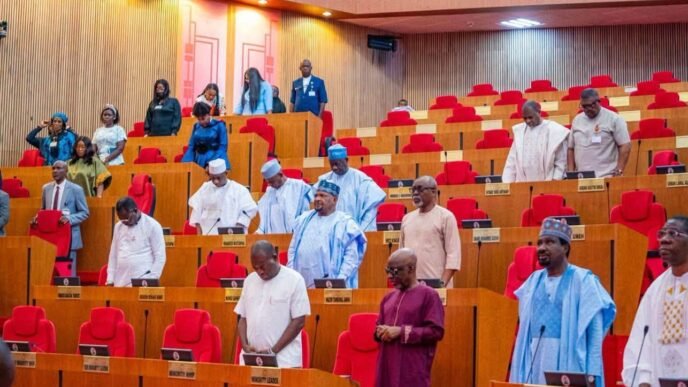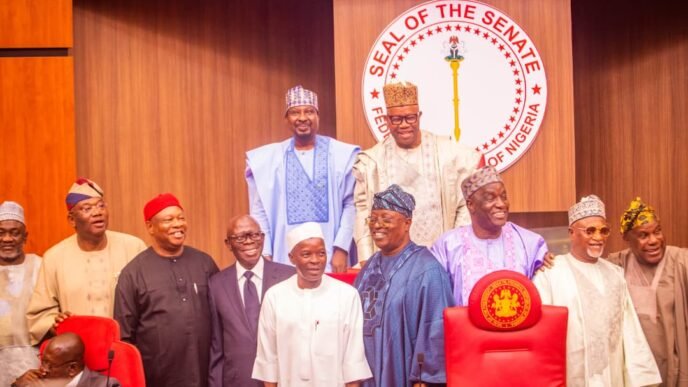
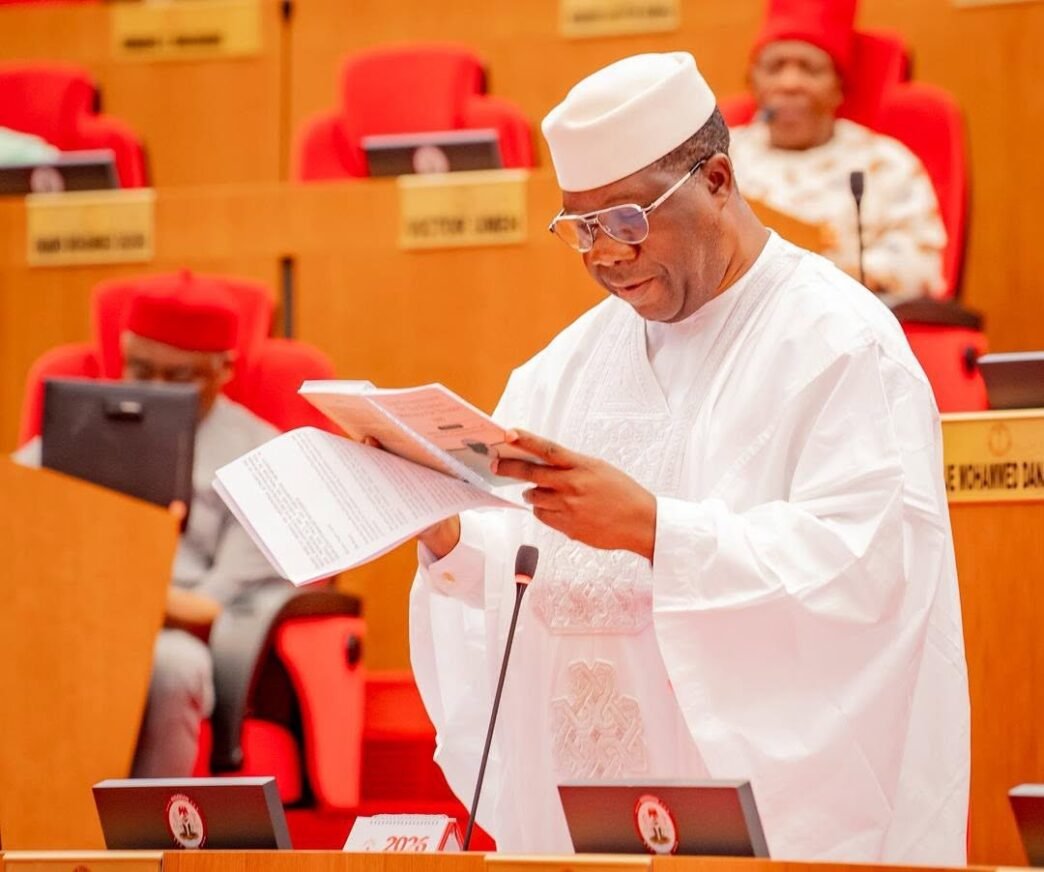
On Wednesday, July 1, 2026, following a high-level briefing with President Bola Tinubu at the Presidential Villa, Senate Leader Opeyemi Bamidele and Ekiti State Governor Abiodun Oyebanji addressed critical national security reforms and state governance, assuring Nigerians of strict measures to regulate the proposed state police framework.
During the address to State House correspondents, the leaders provided updates on the ongoing constitutional amendments regarding decentralized policing, alongside post-election governance and political projections for Ekiti State.
Key Highlights of the Briefing:
Robust Safeguards for State Police: Mechanisms are actively being integrated into the constitutional amendment to prevent state governors from abusing the proposed state policing system.
Speedy Legislative Action: State governors are overwhelmingly in support of the initiative and are prepared to grant speedy approval once transmitted to the State Houses of Assembly.
Post-Election Unity in Ekiti: Governor Oyebanji has commenced reconciliation efforts with opposition candidates to foster unified governance.
2027 Electoral Projections: Ekiti State aims to deliver between 600,000 and 700,000 votes for President Bola Tinubu in the upcoming 2027 general elections.
Addressing public apprehensions regarding the potential weaponization of state police by state executives, Senate Leader Opeyemi Bamidele acknowledged the legitimacy of these concerns but assured the public that the National Assembly is taking proactive steps.
Senator Bamidele described the creation of state police as a “child of necessity” and emphasized that the ongoing constitutional amendment will feature strict regulatory mechanisms.
Most importantly, we are putting mechanisms in the law as we amend the constitution that would prevent or minimize instances of abuse by state governors. In the amendment to the Police Act that will follow, we will spell out more details that cannot possibly go into the constitution of the Federal Republic of Nigeria.
Senator Bamidele Opeyemi.
The Senate Leader noted a strong consensus across political lines, indicating that state governors are fully aligned with the National Assembly on the swift implementation of these security reforms.
Confirming the alignment among state executives, Governor Abiodun Oyebanji noted that the National Economic Council (NEC), comprising all 36 state governors, has extensively deliberated on the matter.
We are ready for state police, and we are grateful to the National Assembly for the constitutional amendments. The governors have made up their minds that they will give it speedy approval so we can start implementing.
Governor Oyebanji
Shifting focus to state affairs following his recent gubernatorial victory, Governor Oyebanji attributed his successful re-election to divine grace and the unwavering support of President Tinubu. Committing to inclusive governance, the Governor revealed that he has actively reached out to opposition candidates to consolidate ideas and build unity.
“The election ended when the winner was declared,” the Governor explained, noting that he had already visited one opposing candidate alongside his campaign council chairman and plans to visit the other. “I told them that I will need all of them, their wisdom, suggestions, and advice to ensure we continue to deliver to our people.”
Looking ahead, Governor Oyebanji affirmed his administration’s dedication to Ekiti State’s comprehensive 30-year development plan, which dictates the state’s annual budget and policy direction.
Addressing the political landscape for 2027, the Governor expressed strong optimism regarding President Tinubu’s prospects in Ekiti State. Citing a consistent upward trajectory in voter turnout from 187,000 votes in 2022 to 318,000 in the 2026 gubernatorial race, he confidently projected that a target of 600,000 to 700,000 votes for the President in 2027 is highly achievable.